Four Sectors. One Response.
A family in Gedo does not experience four programmes. They experience one year — and whatever happens to them in it. We work across health and nutrition, food security and livelihoods, water and sanitation, and resilience, because a crisis does not arrive one sector at a time.
A Drought Does Not Begin as a Health Emergency
It begins as a water problem. What turns it into a health emergency is everything that happens next — and that sequence is the same in Gedo almost every time.
The water point fails
A shallow well runs dry, or a flood contaminates it. Women start walking further, and households fall back on unprotected surface water because there is nothing else.
Disease follows the water
Diarrhoeal illness moves through children under five within weeks. In a dense displacement site it moves in days.
A sick child stops absorbing food
Repeated illness is what turns an underfed child into a wasted one. This is the point at which a family reaches a nutrition programme — long after the problem started.
The household sells what it farms with
Tools, then goats, then the last of the herd, then land access. Each sale buys a few weeks and removes the means of earning the next month.
Nothing is left to absorb the next shock
And in Gedo the next shock is rarely more than a season away. This is where displacement begins, and where a household stops being able to recover on its own.
One Household, Four Sectors, One Year
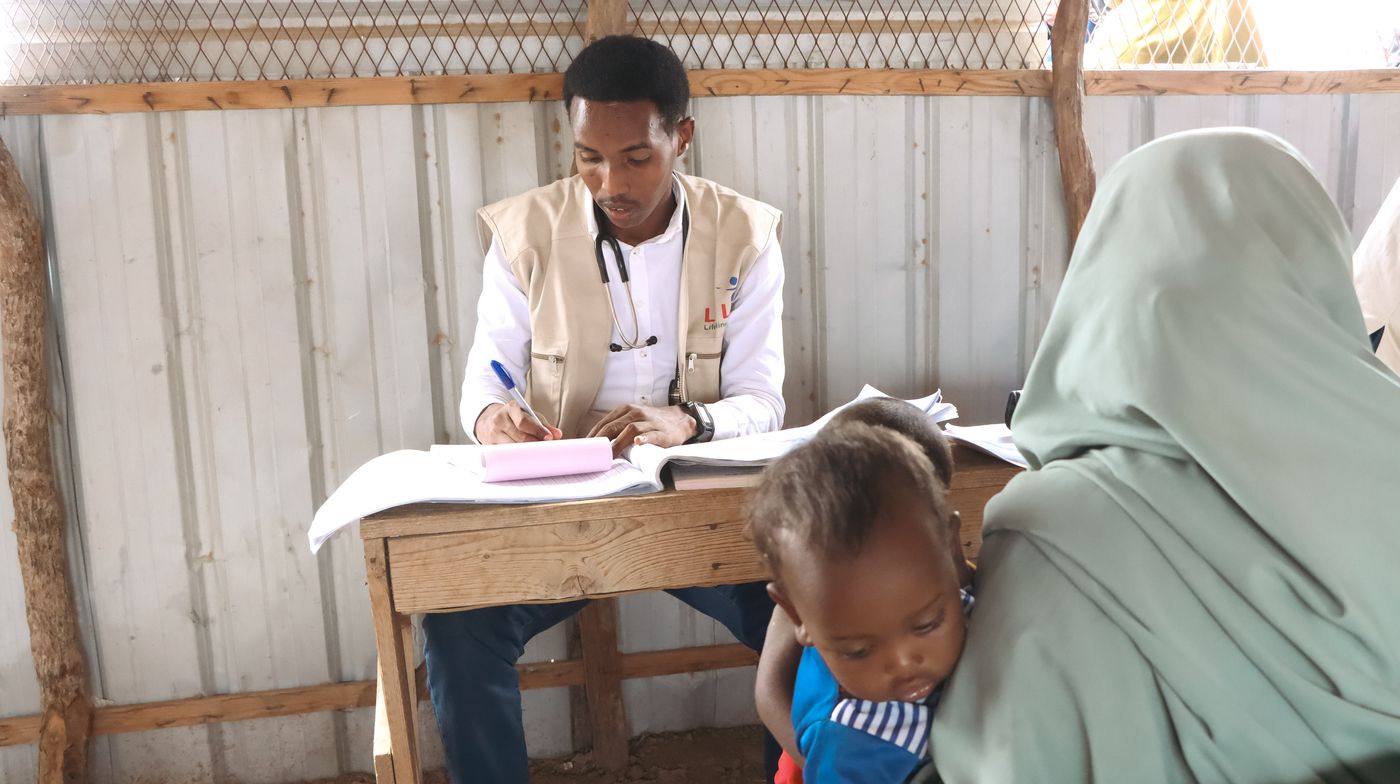
Take a household in Shimbirole East, in Bardhere district, after the 2023 floods. The water point is restored and a treatment unit reaches the household, so the drinking water is safe again. The mobile clinic team screens the children, admits one for malnutrition treatment, and the mother receives infant feeding counselling at her own door.
Tractor hours and fuel clear the flood debris off two hectares; seed and technique come through a Farmer Field School. A cash transfer covers the gap until the first harvest. The mother joins a savings group, and by the second year she is lending into it rather than borrowing from it. Early warning training reaches the village before the following Deyr rains, and the community knows what to move and when.
That is one household. In our reporting it appears in the water figures, the health and nutrition figures, the food security figures and the resilience figures — because it received a service in each. It is one family, and four service contacts. The section below explains why we count it that way, and what that means for every number on this page.
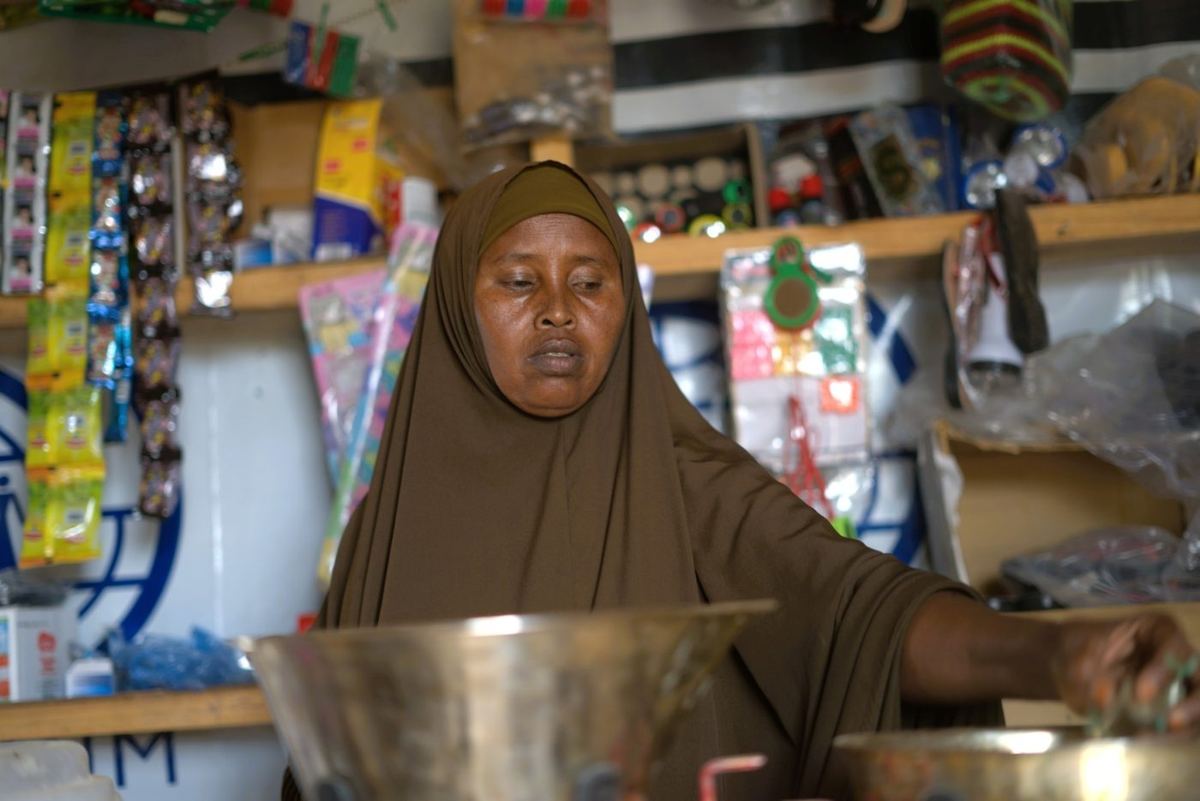 Shimbirole East, Bardhere
How We Count People
Beneficiary figures in this sector are quoted far more often than they are explained. Here is exactly what ours mean.
Direct
A person who received a service from us and whom we recorded individually: a child admitted for malnutrition treatment, a household that collected a cash transfer, a farmer registered for seed and tractor hours, a family registered at a water point we rehabilitated.
Indirect
People who benefit from the same intervention without being individually registered: the rest of a household when one member receives a transfer, a whole village served by a restored borehole, communities protected downstream by a flood embankment.
Service contacts, not headcount
Our sector figures count services delivered, not unique individuals. One person can and does appear in more than one sector — which is the point of working the way we do.
The Same Person, Counted in Three Sectors
A mother in Belet Xaawo collects water from a borehole we rehabilitated. She brings her youngest to a mobile clinic we run, and the child is admitted for malnutrition treatment. Under the same programme she joins a savings group and receives seed for a household garden.
She appears once in our water and sanitation figures, once in our health and nutrition figures, and once in our food security and livelihoods figures. She is one person. She is three service contacts. Counting her once and choosing a single sector to put her in would hide two of the three things we actually did for her.
This is deliberate, and it is standard humanitarian reporting practice. A health system needs to know how many children it treated — not how many of those children also drank water from a source it did not fund. But it does mean the sector figures on this page add up to more than the number of individual people behind them, and we would rather say so plainly than let the arithmetic imply a claim we are not making.
You can see the same principle in the case studies below: several people appear under more than one sector, because more than one thing was done for them. Where a figure counts unique individuals rather than service contacts, we say so at the figure.
Health & Nutrition
Keeping children alive through the crisis, and treating the conditions that put them there.
In much of Gedo the nearest functioning health facility is a day away on foot, and for a mother carrying a wasted child a day is a long time. We run fixed facilities, mobile teams that reach villages with no clinic of their own, and community outreach that finds malnourished children before they reach crisis rather than after.
Malnutrition treatment is the most visible part of this work and the most misunderstood. Admitting a child, stabilising her and discharging her recovered is not the end of the intervention. It is the middle. A child discharged into a household with unsafe water and no food comes back. That is why we do not deliver nutrition on its own, anywhere.
- Fixed health facilities and mobile clinics reaching remote villages every week
- Treatment for severe and moderate acute malnutrition (SAM and MAM)
- Maternal, newborn and child health services, including safe delivery
- Immunisation campaigns and community disease surveillance
- Rapid response to cholera, measles and acute watery diarrhoea outbreaks
- Infant and young child feeding counselling, delivered house to house
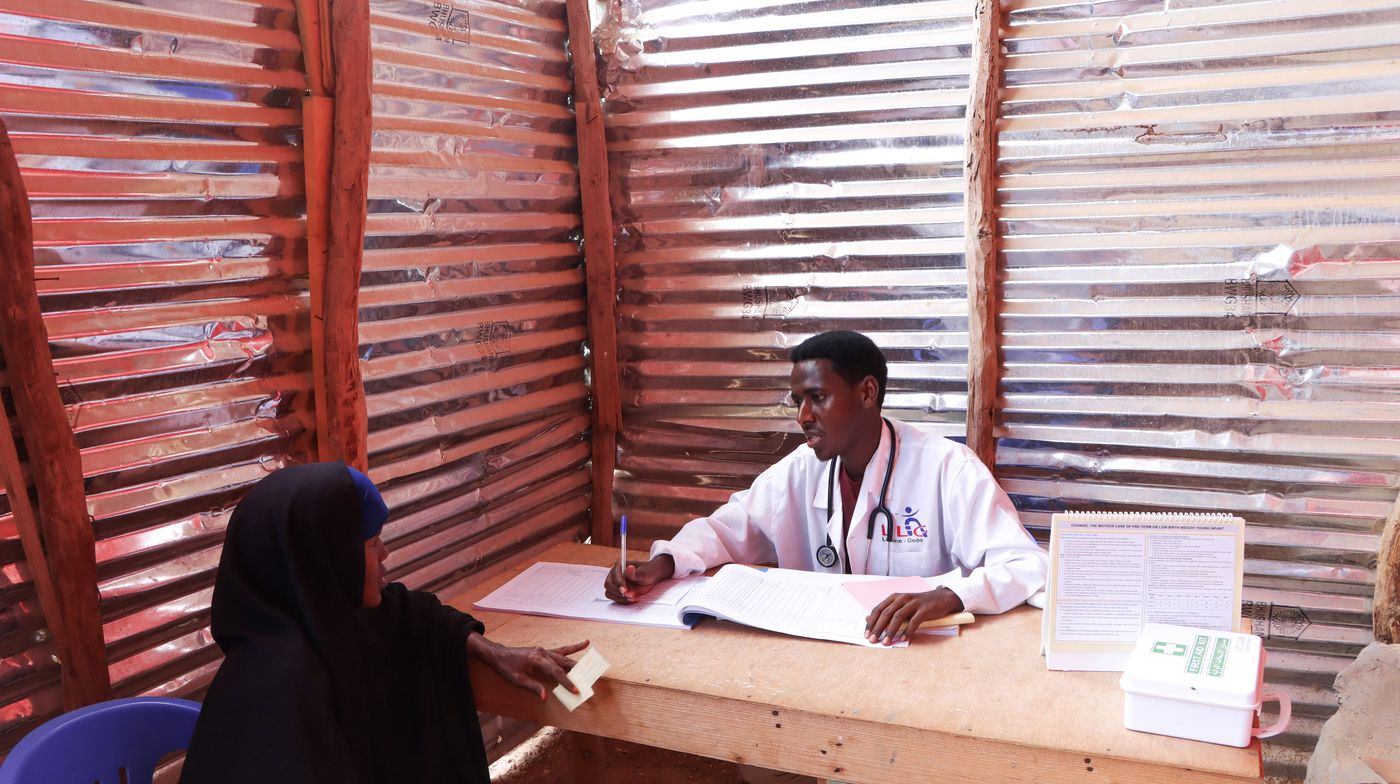 LLG clinic, Bardhere
Watch: community health in Shimbirole
Delivering Lifesaving Community Healthcare in Shimbirole
Community health delivery under the ECHO-funded Caafimaad Plus consortium, reaching households that have no clinic of their own.
Watch on YouTube →Food Security & Livelihoods
Emergency assistance keeps a family alive this month. A livelihood keeps them alive next year. We do both, and we are clear about which is which.
Almost every household we work with was self-sufficient until a shock took the means of production — a flood that buried two hectares under sand and debris, a drought that killed a herd built over a lifetime. Cash and food buy time, and time matters. But they do not put the farm back.
What puts the farm back is tractor hours and fuel to clear the land, seed and technique through a Farmer Field School, veterinary support and locally produced fodder to hold a herd through a bad season, and a market that will take the produce. Our case studies below are mostly stories of that second thing, because that is what lasts.
- Unconditional and multi-purpose cash transfers, spent in local markets
- Agricultural inputs — seed, tools, tractor hours and fuel
- Farmer Field Schools and climate-smart cultivation technique
- Livestock restocking, veterinary support and locally produced fodder
- Cash-for-work on community infrastructure the village chooses
- Farmer cooperatives, market linkage and value-chain strengthening
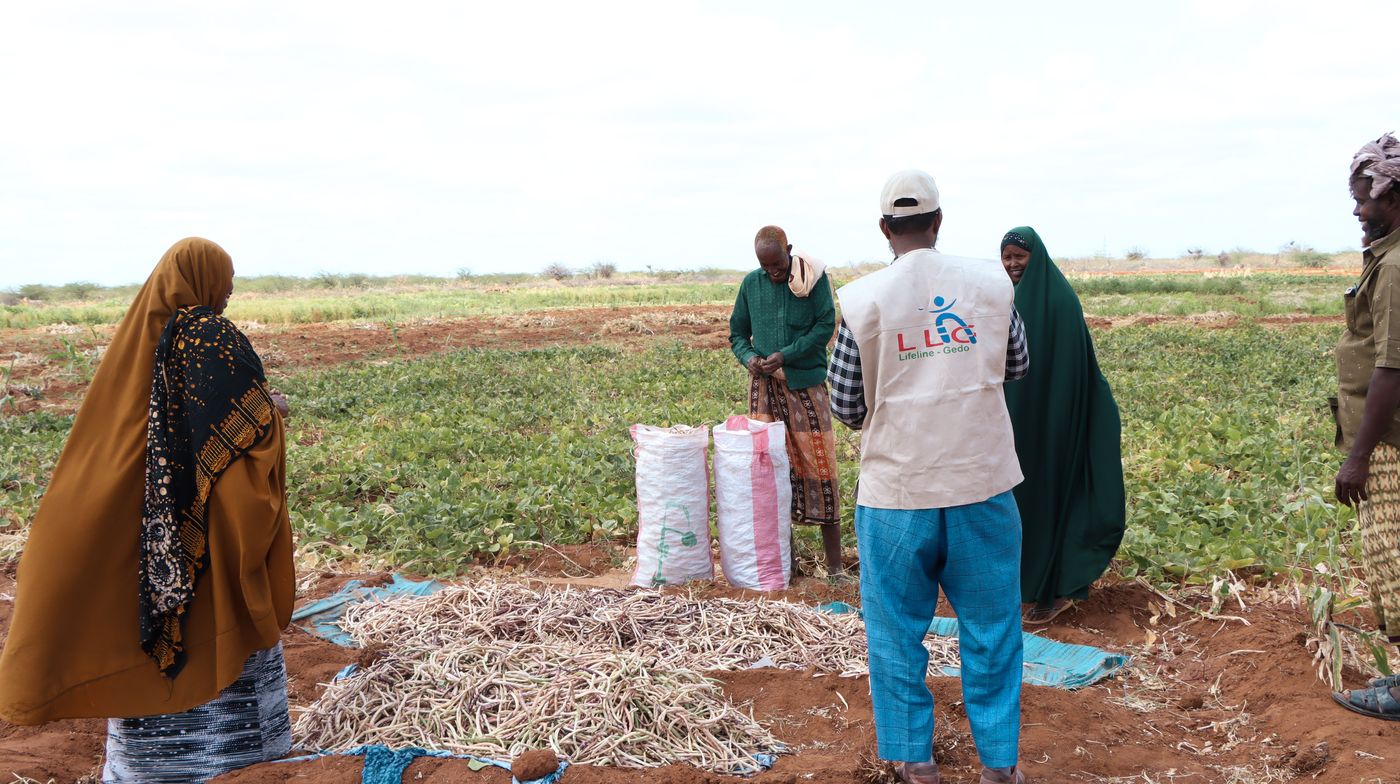 Harvest, Shimbirole East
Watch: farming and livestock in Gedo
Empowering Cooperative Farmers in Somalia
Farmer cooperatives organising, training and taking produce to market together.
Watch on YouTube →Building Resilient Farming Communities in Somalia
Climate-smart practice on smallholder land — the work that decides whether the next shock becomes an emergency.
Watch on YouTube →Protecting Livestock During Drought
Fodder produced by local contracted farmers and distributed to pastoralist households — the intervention behind Tamima's story.
Watch on YouTube →Water, Sanitation & Hygiene
The first thing a drought takes and the first thing a flood contaminates — and the single intervention that changes the most other things at once.
Lifeline Gedo started as a water organisation. Our first project, in 2006, was an emergency water trucking scheme funded by the Gedo diaspora in England and Australia. Two decades later water is still where we usually start, for a practical reason: it is the intervention with the widest downstream effect.
Restore a borehole in a village that had been walking hours for water and the walk stops, the surface-water disease falls, girls stay in school, and women recover a large part of their day for work that earns. None of that is a water outcome on paper. All of it is caused by the water.
- Borehole rehabilitation, new construction and solarisation
- Emergency water trucking during acute shortage and displacement
- Water quality testing, chlorination and household treatment units
- Latrine construction in schools, health facilities and communities
- Hygiene kit distribution and community hygiene promotion campaigns
- Water point committees trained to run and maintain the source after we leave
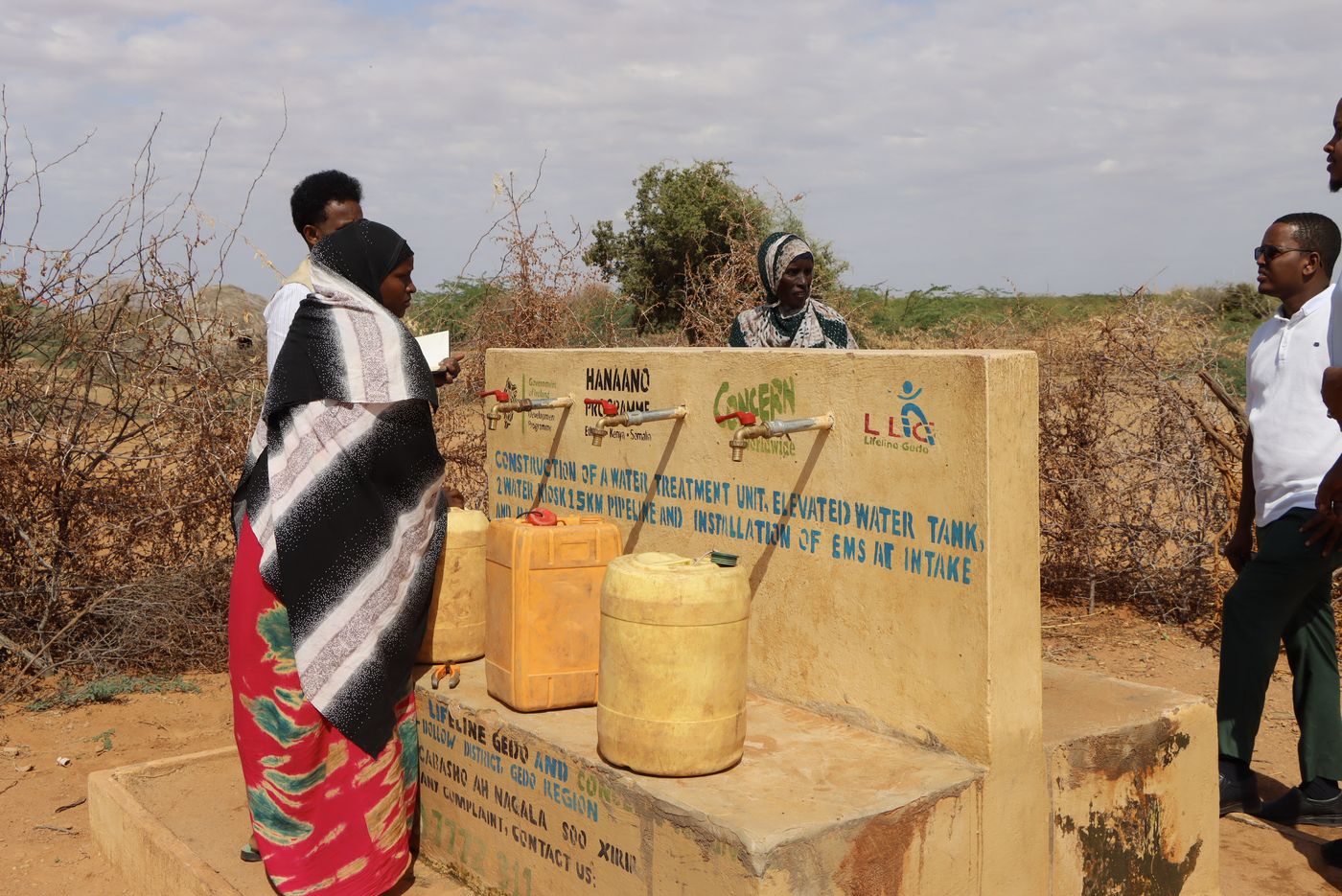 Water kiosk, Dollow
Watch: water points and sanitation
Improving Access to Safe Water and Sanitation in Somalia
Water and sanitation for displaced households in the dense settlements around Daynille, where safe water is the difference between a settlement and an outbreak.
Watch on YouTube →Bringing Safe Water to the Baygal Community
What a restored water point changes for a community that had been walking for it.
Watch on YouTube →Safe Water Transforms Lives in Shimbirole
Shimbirole is one of the programme's anchor communities — and the village behind several of the stories on our Impact page.
Watch on YouTube →Resilience & Early Recovery
Everything above is what we do when a shock arrives. This is what we do so the next one costs less.
Gedo now receives drought and flood inside the same twelve months. A response model that only activates after the damage is a model that will be activated forever. Resilience work is the part of our portfolio that tries to change the arithmetic — earlier warning, money held locally, land that holds water instead of losing it, and households with more than one way to earn.
It is also where our engineering sits. Under the AARAN consortium we are building flood-protection works ahead of a forecast El Niño — embankments, spillways and river-bank protection designed to be finished before the rains rather than repaired after them.
- Village Savings and Loan Associations and women's Self-Help Groups
- Community-based early warning and anticipatory action ahead of forecast shocks
- Flood-protection engineering — embankments, spillways and river-bank works
- Ecosystem, rangeland and land restoration
- Women's leadership, protection and gender-responsive programme design
- Durable solutions for displaced families — land, shelter and integration
- Climate-smart innovation, including soil-free hydroponic production
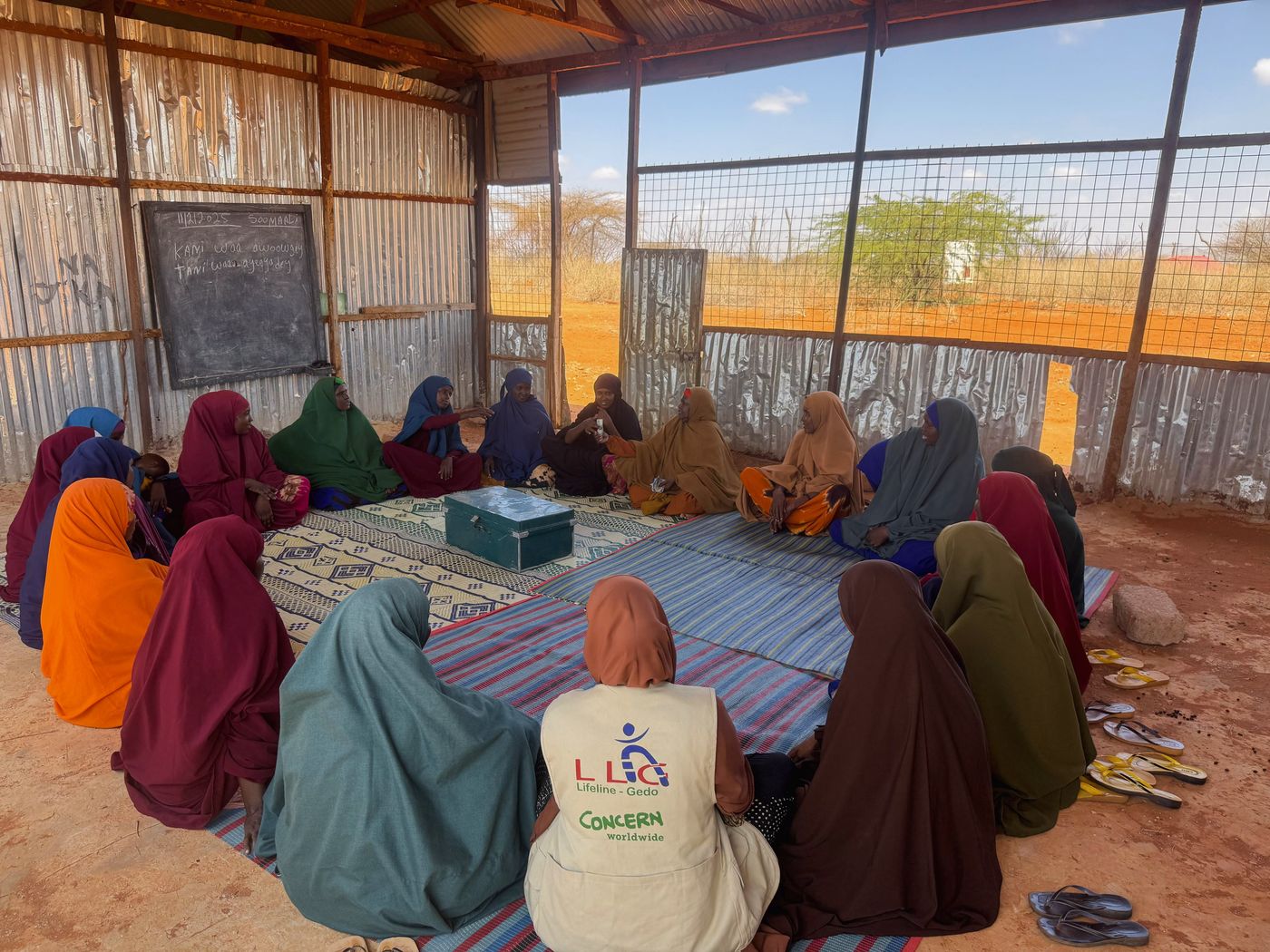 Savings group, Loleys
Watch: growing food without soil
Growing Food Without Soil
Soil-free, water-efficient growing in a region where drought has made conventional farming unreliable.
Watch on YouTube →The Whole Picture, in Two Places
Eight field stories
Named people in named villages, with what they had before, what was done, and what changed — recorded by our own field teams between 2025 and 2026. Several appear under more than one sector above, for the reason explained in our counting note.
Read the case studies →Eight films from the field
Water points, community health delivery, farmer cooperatives, fodder distribution and hydroponics — filmed on site with the communities who use them. Nothing loads from YouTube until you press play.
Watch the films →Active Projects
What Lifeline Gedo is implementing right now across Gedo, Banadir and Middle Jubba — and what each project is working to achieve.
Building Resilient Communities in Somalia — BRCiS III
FCDO · Oct 2023 – Jun 2028
Strengthening the capacity of drought- and flood-prone communities to absorb shocks without losing their livelihoods. Work centres on ecosystem restoration, climate-smart agriculture, community-based early warning systems and flood mitigation infrastructure.
Gedo region
- Water, Light and HopeHawa · Bantaal village, Gedo
- From Despair to HopeFatuma Ibrahim Noor, 38 · Shimbirole East, Bardhere
- From Loss to ResilienceHawa Abdiladif Adan, 37 · Shimbirole East, Bardhere
- Rebuilding a Farm the Floods BuriedFatuma Abdullahi Abdirahman, 37 · Bandar, Bardhere
- A Farmer AgainAbdiyo Hussein Muse, 32 · Oda, Belet Xaawo
- Four Bales, and a Herd That HeldTamima Adan Abdirahman, 67 · Bulacadey, Bardhere
Preventing Wasting in the Mandera Triangle — Hanaano
Irish Aid, through Concern Worldwide · Apr 2024 – Dec 2026
Our flagship programme against child wasting, treating the causes rather than only the symptoms — integrated nutrition services, safe water, climate-smart livelihoods and women's economic empowerment delivered together across the Somalia–Kenya–Ethiopia border area.
Mandera Triangle · Gedo region
Reducing Vulnerabilities of Displaced Communities through Durable Solutions
FCDO · Oct 2023 – Jun 2028
Moving displaced families beyond emergency dependence toward settled, self-reliant lives — secure land and shelter, restored livelihoods, access to basic services, and integration with host communities in Bardhere.
Bardhere district, Gedo
Caafimaad Plus — Integrated Health & Nutrition
ECHO, through the Caafimaad Plus Consortium · since 2019
Expanding access to essential health and nutrition services through fixed health facilities, mobile teams reaching villages with no clinic of their own, and community outreach that finds malnourished children before they reach crisis.
Bardhere · Garbahaarey · Belet Xaawo
Relief Assistance & Baxnaano Social Safety Net
World Food Programme, with the Ministry of Labour and Social Affairs · since 2024
Cash-based assistance that lets families buy food in their own local markets — combining emergency relief for households hit by drought, conflict and displacement with predictable safety-net transfers that reduce the need for emergency aid over time.
Gedo region
Multi-Purpose Cash Assistance
ECHO, through the Somali Cash Consortium · since 2023
Unconditional cash transfers that let households decide their own priorities — food, water, medicine, school costs or debt — preserving dignity and choice while strengthening coping capacity during crisis.
Gedo region
Emergency WASH in Urban Displacement Settings
Somalia Humanitarian Fund (SHF) · since 2024
Improving access to safe water and sanitation for displaced and vulnerable households, combining water infrastructure and treatment with hygiene promotion to cut waterborne disease transmission in dense urban settlements.
Banadir region
Hydroponics for Climate-Smart Food Production
GIZ — direct funding · since 2025
An innovation project introducing soil-free, water-efficient growing systems to communities where drought has made conventional farming unreliable — producing fodder and vegetables using a fraction of the water traditional cultivation requires.
Gedo region
TERRA, RAF & Danwadaag Resilience Programmes
Multi-donor resilience portfolio
A complementary set of resilience programmes supporting land and ecosystem restoration, anticipatory action ahead of forecast shocks, and durable solutions for displaced families across our operational areas.
Gedo · Banadir · Middle Jubba
Completed Projects
Twenty-one years of continuous delivery in Gedo — from our first emergency water trucking scheme in 2006, funded by the Gedo diaspora, to multi-year resilience and health consortium programmes today.
| Period | Project | Donor / Partner |
|---|---|---|
| 2024 | Emergency response for flood-affected populations in Bardhere and Buurdhuubo | International Rescue Committee |
| 2023–24 | Cross-border emergency relief: integrated health, water, sanitation and hygiene support for populations affected by drought in Somalia and Kenya | Action Against Hunger |
| 2023–24 | Integrated emergency health, nutrition, WASH and protection for populations affected by El Niño, South Central Somalia | FCDO |
| 2023 | Integrated emergency life-saving health, nutrition and WASH support in Bardhere | Concern Worldwide / ECHO — Caafimaad Plus |
| 2023 | Emergency WASH services in Bardhere, Gedo region | Concern Worldwide CEO Fund |
| 2022–23 | BRCiS HARBS drought response | Concern Worldwide / FCDO |
| 2022–23 | Coordinated multi-purpose cash assistance for drought and crisis-affected households | Concern Worldwide / ECHO |
| 2022 | Emergency Response Fund Scheme | Concern Worldwide / Irish Aid |
| 2022 | Integrated health and nutrition mobile clinics with house-to-house IYCF and hygiene promotion, Belet Xaawo | Concern Worldwide GD Fund |
| 2022 | Humanitarian assistance to drought and conflict displaced households, Bardhere | Concern Worldwide CEO Fund |
| 2022 | Somalia Crisis Recovery Response | Concern Worldwide / World Bank |
| 2022 | Drought response through the Caafimaad Plus Consortium | Concern Worldwide / ECHO |
| 2021–24 | Multi-sectoral humanitarian response to the deteriorating nutrition situation in severely affected crisis contexts | Action Against Hunger / GFFO |
| 2021–22 | BRCiS IRF drought scale-up | Concern Worldwide / FCDO |
| 2021–22 | BRCiS: a nutrition-sensitive resilience building programme | Concern Worldwide / USAID |
| 2021–22 | Increasing access to safe WASH promotion for displaced people in IDP settlements, Bardhere | Somalia Humanitarian Fund |
| 2021 | Emergency assistance to populations displaced by armed clashes in Belet Xaawo | Concern Worldwide / Start Fund |
| 2020–23 | Caafimaad Plus in Banadir, Gedo and Lower Shabelle | Concern Worldwide / ECHO |
| 2019–20 | Somali Humanitarian and Resilience Programme (SHARP) | Concern Worldwide / DFID |
| 2018–22 | Building Resilient Communities in Somalia (BRCiS II) | NRC / Concern Worldwide / DFID |
| 2018–20 | Durable Solutions (EUTF) | NRC / Concern Worldwide / European Union |
| 2018–20 | Drought Response Project in Somalia | Concern Worldwide / DFID |
| 2018–19 | BRCiS SHARP Uplift Project | NRC / Concern Worldwide / DFID |
| 2018 | Non-consulting services for drought response and resilience | Concern Worldwide / World Bank |
| 2018 | Rapid Emergency Actions for Communities and Households affected by drought and displacement (REACH) | Concern Worldwide / ECHO |
| 2018 | Drought Response in Somalia (IRF5) | Concern Worldwide / DFID |
| 2017 | Drought Response in Somalia | Concern Worldwide / DFID |
| 2017 | Emergency supply of clean water to 6,156 households across 18 villages, with borehole rehabilitation | IOM Somalia |
| 2017 | Rapid Emergency Actions for Communities and Households affected by drought and displacement (REACH) | Concern Worldwide / ECHO |
| 2017 | IRF4 drought response | Concern Worldwide / DFID |
| 2017 | Humanitarian Aid Response for Somalis Affected by Drought and Displacement (HARSAD) | Concern Worldwide / ECHO |
| 2015–16 | Emergency assistance to IDPs, returnees and vulnerable host communities | Concern Worldwide / ECHO |
| 2015 | Emergency assistance for vulnerable populations in South Central Somalia | Concern Worldwide / DFID |
| 2014–17 | Building Resilient Communities in Somalia (BRCiS) | Concern Worldwide / DFID |
| 2014–15 | Emergency assistance to vulnerable populations in Southern Somalia | Concern Worldwide / ECHO |
| 2013 | Enhancing peacebuilding by strengthening the role of the local district peace committee in conflict management, Gherille | Pact / DFID |
| 2012–13 | Emergency Response Somalia | Concern Worldwide / ECHO |
| 2012 | Humanitarian assistance for populations in crisis in Gedo region | Concern Worldwide / Trócaire |
| 2011 | ECHO-supported emergency response project (HOPE) | Concern Worldwide / ECHO |
| 2011 | NMFA-supported drought response project (HADAF) | Concern Worldwide |
| 2010 | ECHO-supported emergency response project (GABAAD) | Concern Worldwide / ECHO |
| 2009 | Emergency water trucking | Concern Worldwide |
| 2008–09 | Rehabilitation of water facilities at Khadija Haji, Belet Xaawo district | Oxfam GB |
| 2008 | Provision of water facilities at Damasa, Elwak district | Oxfam GB |
| 2008 | Emergency water trucking scheme and public health promotion | Oxfam GB, in coordination with Devcon |
| 2006 | Emergency water trucking scheme and public health promotion — our first project | Gedo diaspora community in England and Australia |
Fund a Program That Saves Lives
Every program is delivered by Somali teams with deep community trust.