Somalia-led. 21 Years. Still Here.
Founded in 2005 by Somali humanitarian workers, Lifeline Gedo delivers where few others can — with deep community roots across Somalia's Gedo region.
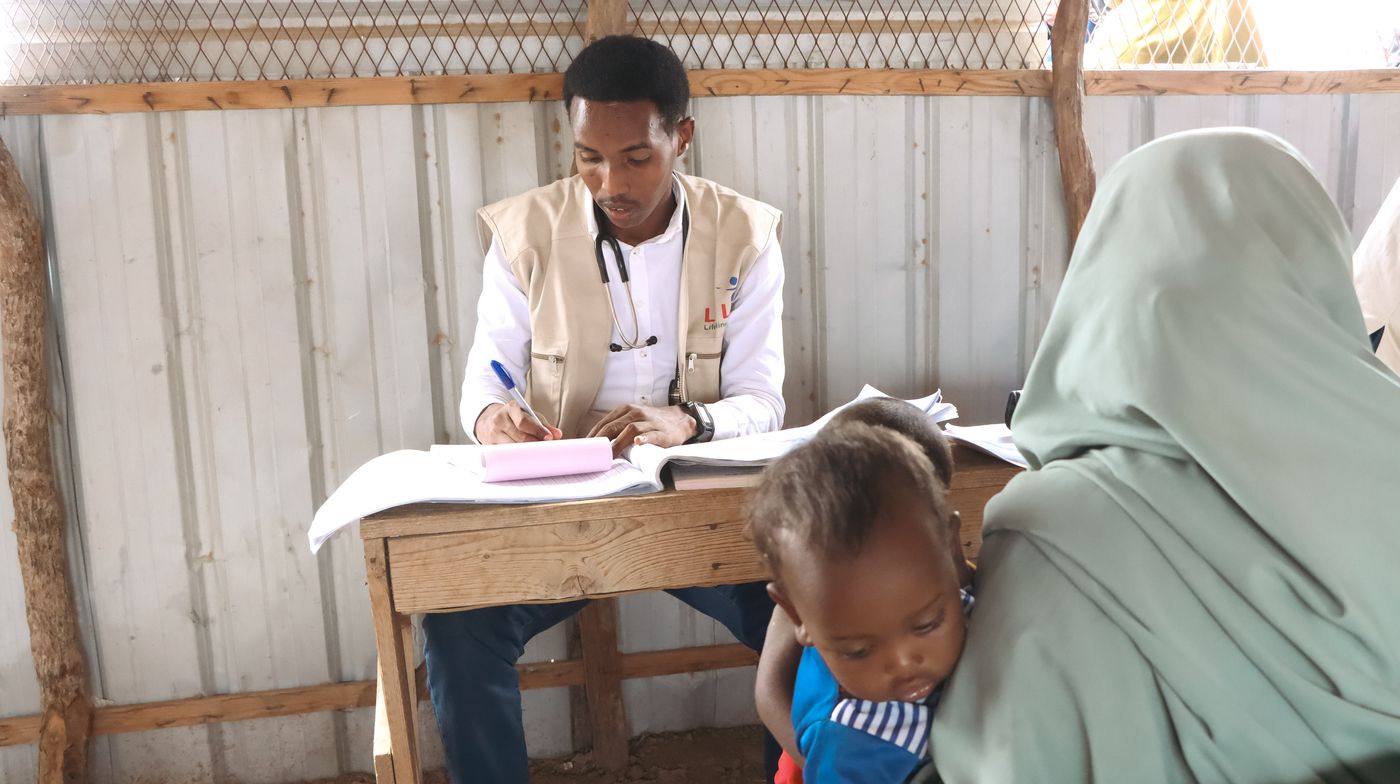 LLG health team, Camp Iftin
Achieving socio-economic justice and reducing community vulnerability through equitable humanitarian and sustainable development programs.
A Somalia where everyone has access to basic needs and lives in peace and prosperity.
Reaching Where Others Cannot
Gedo is one of the hardest regions in Somalia to operate in — remote, on a triple border, cut by flood and insecurity, and a long way from where most humanitarian decisions are made. Lifeline Gedo's headquarters is inside it.
We Do Not Travel to Gedo. We Are From It.
Most organisations reach Gedo from somewhere else. Our head office is in Dollow. We were founded in 2005 in Belet Hawa and Elwak — two of the border towns the humanitarian response has always struggled to reach — by people from those towns, during a crisis that was killing their own neighbours.
Twenty-one years later we still hold head offices in both, with field offices in Garbahaarey, Bardhere, Kismayo and Dhusamareeb, and an operations and logistics hub across the border in Mandera, Kenya.
The distinction matters more than it sounds. An organisation that deploys into a district can be stopped from arriving. An organisation whose staff live in the district is already there — through the season, through the shock, and through the months when movement is difficult for everyone else. Our teams do not evacuate to a capital when a district gets hard, because the district is where they live.
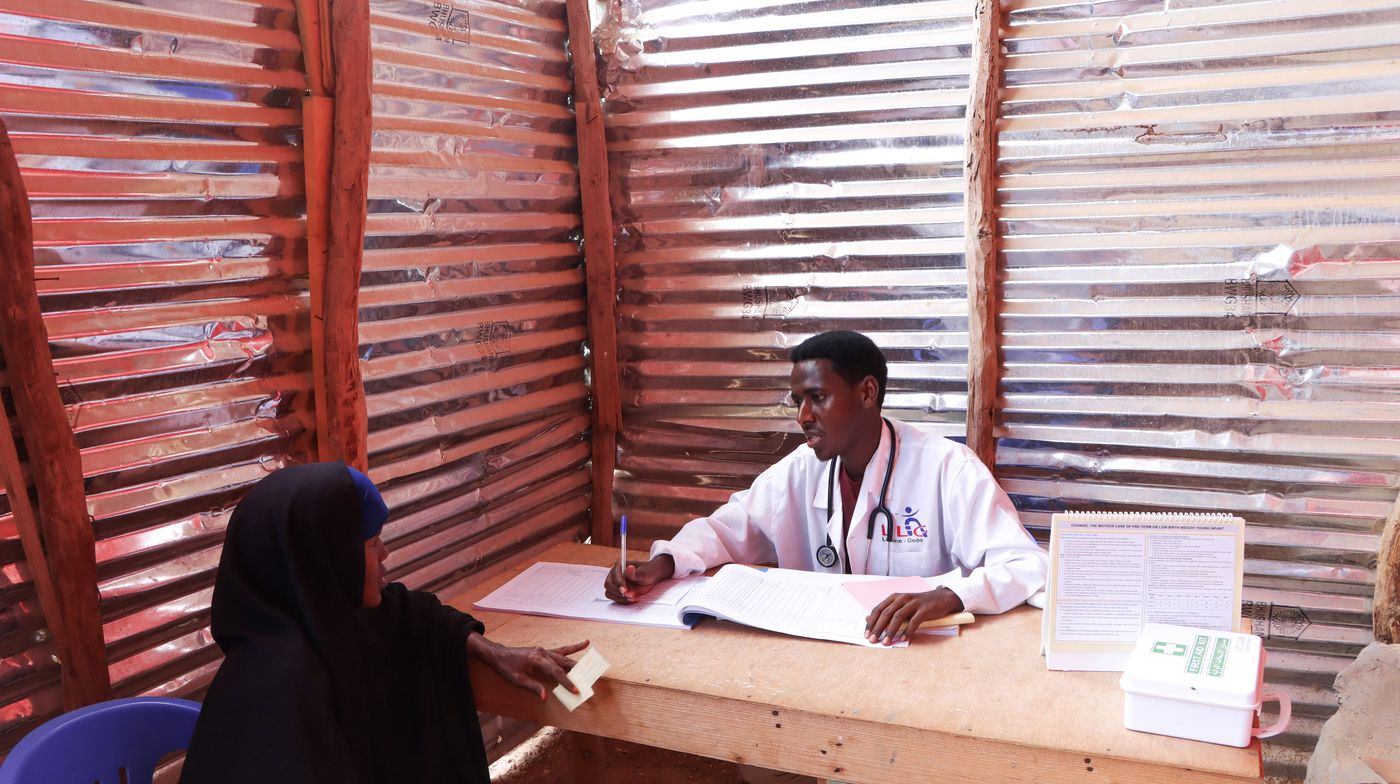 LLG clinician, Habal Aday
Access Is a Relationship, Not a Permission
In Gedo, access is not granted once at the centre and then applied everywhere. It is settled locally — village by village, with elders, local authorities and the households themselves — and it rests almost entirely on whether people know who you are and what you did the last time you came.
We have twenty-one years of last times. Our staff are recruited from the communities where they work. They speak the language and the local dialect, they are known by name, and they are answerable to their own neighbours for the quality of what is delivered. When a distribution is short or a water point fails, the person who hears about it first lives there.
That is the practical content of the word local. It is not a funding category. It is the reason a team can travel a road, hold a distribution and be expected back.
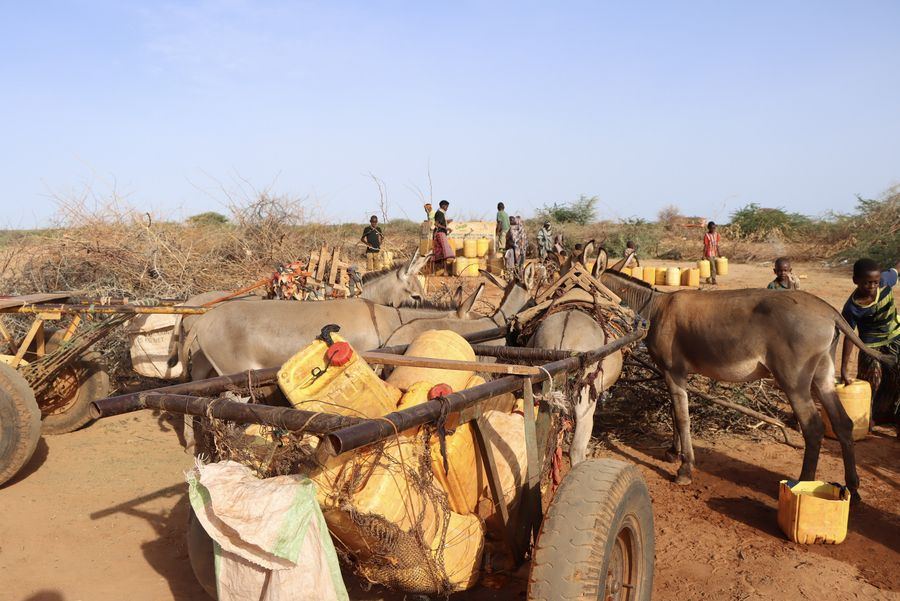 Water point, Tula-Amin, Gedo
Three Countries, One Border Area, One Operation
Gedo sits where Somalia, Kenya and Ethiopia meet. The Mandera Triangle is a single community area served by three national systems — and pastoralist families cross it constantly, because livestock and rainfall do not observe a frontier.
That geography is an obstacle for most agencies and a working advantage for us. When a route inside Somalia is cut by flood or insecurity, the road often still exists on the Kenyan side, which is why our operations and logistics hub sits in Mandera. It is also why we deliver Hanaano as a genuinely cross-border programme alongside RACIDA in Kenya and Pastoralist Concern in Ethiopia — one response across the Triangle, rather than three country projects that only meet in a report.
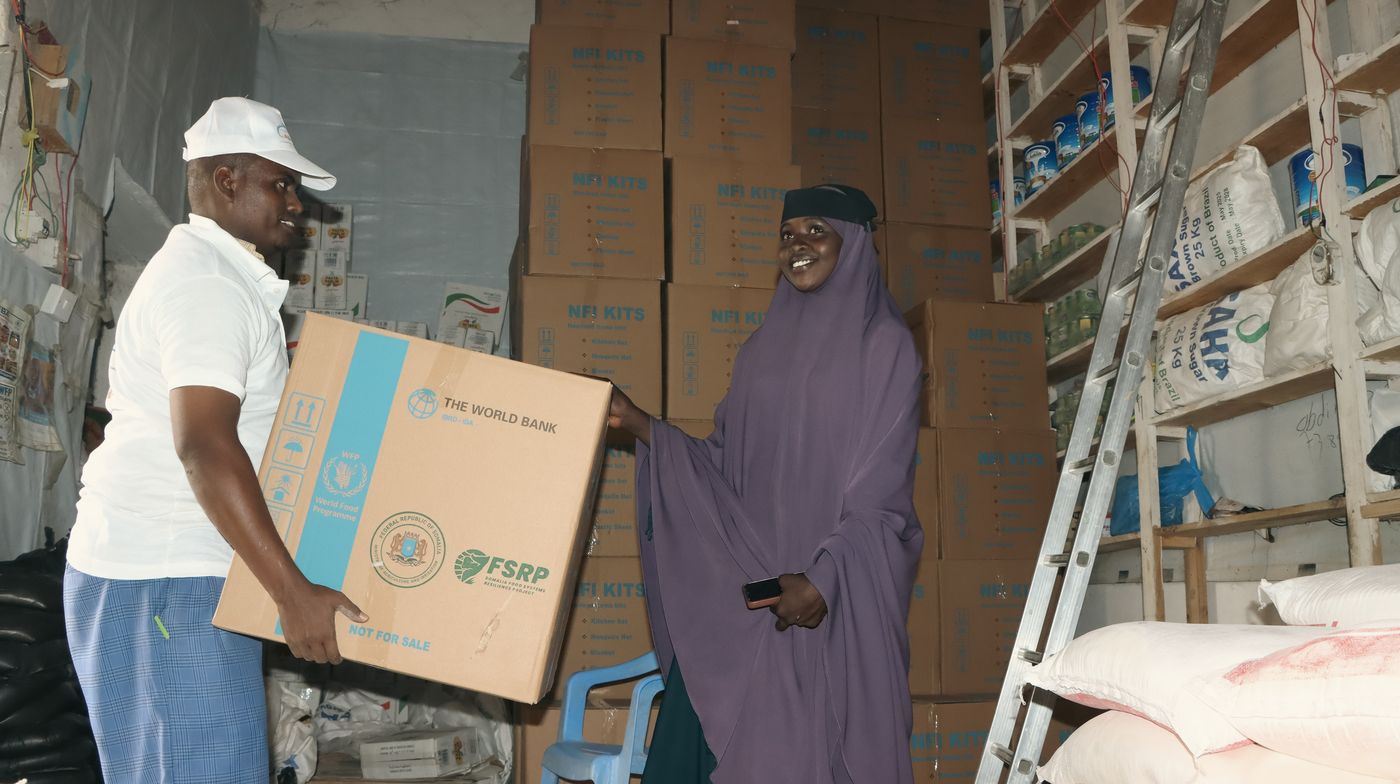 Distribution logistics, Bardhere
Delivery Models Built for Distance
Reaching a hard place is not one capability. It is a set of them, and each exists because a household could not otherwise be reached at all.
Mobile health and nutrition teams run a weekly cycle to villages with no facility of their own, so the clinic travels rather than the patient. Emergency water trucking serves settlements beyond any pipeline or working borehole — the intervention we were founded on, in 2006. House-to-house infant feeding counselling exists because the households most at risk are precisely the ones that do not come to a clinic on their own.
Community health and hygiene workers are drawn from and live in the villages they serve, which keeps coverage alive between visits. Community-based early warning means a village reports a shock long before an external assessment team could arrive to find it. And water point committees are trained to run and repair a source after the project closes, because sustainability in a remote district is not a report section — it is whether the pump still works in three years.
Access Without Accountability Is Not Fundable
Donors ask a local organisation two questions. Can you reach the people? And can you account for the money? In a region like Gedo, most organisations can answer one of them.
We answer the first with twenty-one years of continuous presence and the offices listed above. We answer the second with audited financial systems, a compliance record built over sixteen years of partnership with Concern Worldwide, full membership of the BRCiS consortium, and the delivery of European Commission humanitarian funding through both the Caafimaad Plus and Somali Cash Consortium programmes — to European standards of reporting, in one of the hardest operating environments on the continent.
That combination is the whole argument for localisation, and it is the argument we took to Brussels, Addis Ababa and Belém. Every commitment to shift humanitarian funding to local actors is only as credible as the local actors able to absorb it.
LLG team, Camp IftinWhat Guides Every Decision
Transparency
We publicly disclose our reports and financial statements, and operate openly with communities, partners, and donors.
Excellence
Well-structured, sector-specific teams of qualified professionals ensure our programming meets the highest standards of quality and impact.
Accountability
We are responsible to the communities we serve and comply with the most rigorous donor and reporting requirements.
Community-Based
Communities are consulted in prioritizing their own needs — every intervention is locally led and tailored to the people it serves.
Two Decades on the Ground
Founded on 20 October 2005 in Belet Hawa and Elwak by Somali elites from the Gedo region, responding to a humanitarian crisis that claimed many lives.
Began our strategic partnership with Concern Worldwide — over USD 30 million in joint programs since, reaching 200,000+ people across Gedo.
Expanded health programs to three additional districts during the famine, reaching thousands of families.
Launched our WASH program and constructed boreholes in Dolow and Belet Hawa.
Established women's savings groups reaching over 2,000 women across the region.
Conducted the largest drought emergency response in our history.
21 years on: 85,000+ people reached, 230+ projects completed, and still present in 12 districts.
The People Behind the Mission
Somali-led governance and management, accountable to the communities we serve — and sector-specific technical teams delivering the work in the field.
Meet the Communities We Serve
See what 21 years of locally-led humanitarian work has achieved in Gedo.