A Somali Voice on the Global Stage
Communities in Gedo live on the front line of a climate crisis they did not cause. Lifeline Gedo carries their evidence and their priorities directly into the rooms where decisions about climate finance, nutrition and localisation are made.
Seats at the Table in Somalia
Lifeline Gedo now serves where Somalia's humanitarian response is steered — on the national fund's Advisory Board, in the NGO community's forum in Mogadishu, and in district coordination in Gedo.
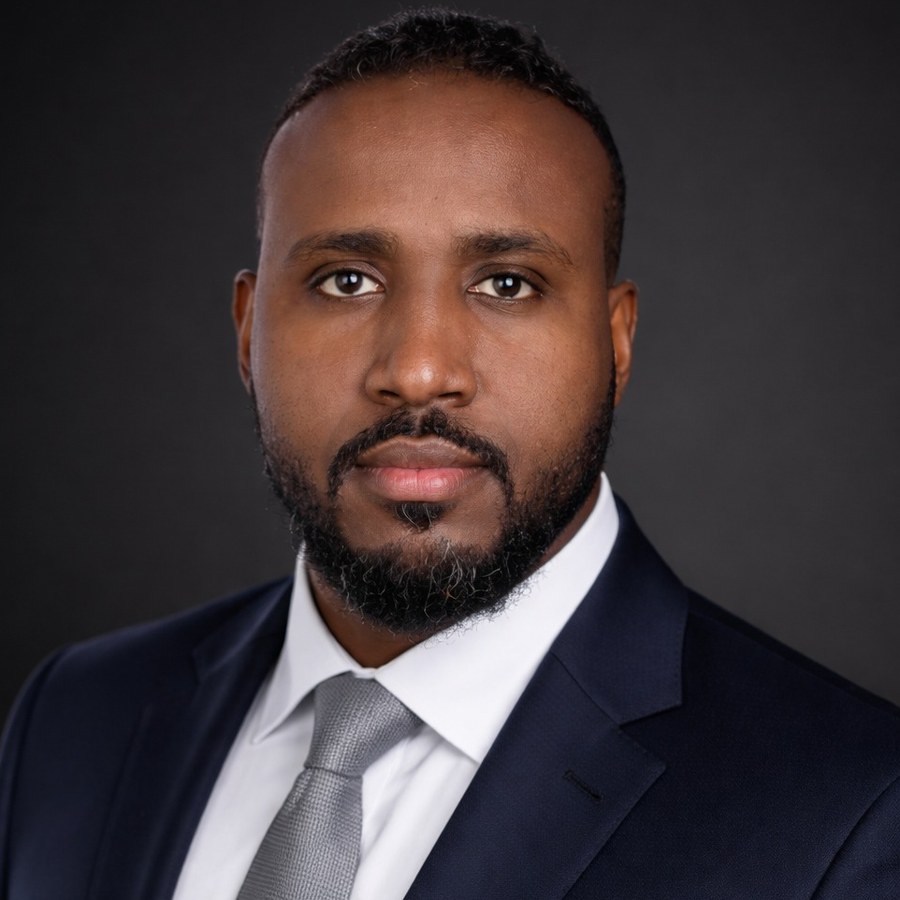
Our Executive Director elected to the Somalia Humanitarian Fund Advisory Board
In an election among members of the Somali NGO Consortium that closed on 26 August 2026, Abdifatah Ahmed Mohamud was chosen as one of the NGO representatives on the Advisory Board of the Somalia Humanitarian Fund (SHF). The term runs for two years.
The Advisory Board supports the Humanitarian Coordinator, who chairs it, and brings together UN agencies, contributing donors and national and international NGOs. Its work covers four areas:
- Strategy — advising on allocation strategies and funding priorities
- Risk management — supporting periodic risk analysis and risk management plans
- Transparency — monitoring that the Fund's processes treat all stakeholders fairly
- Performance — reviewing operations and advising on how the Fund can perform better
NGO representatives serve on behalf of the wider NGO community, not their own organisations. Consultation with NGOs on Board matters runs through the Somali NGO Consortium.
Somali NGO Consortium — Mogadishu Advisory Board
Lifeline Gedo was elected to the Somali NGO Consortium's Mogadishu Advisory Board in 2026. Our Executive Director holds the organisation's seat, alongside his role on the SHF Advisory Board.
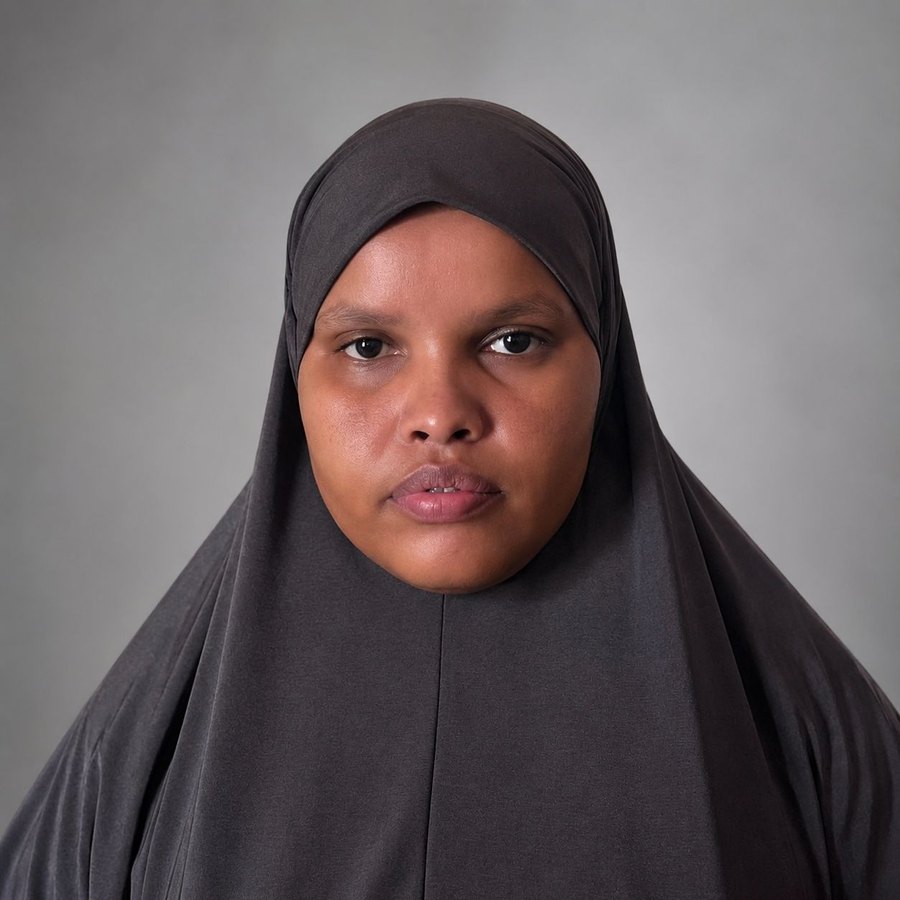
Co-Chair, Area Based Coordination — Dolow, Belet Hawo & Elwak
Asma Ibrahim Barre, our Hanaano Project Coordinator, co-chairs the Area Based Coordination (ABC) group for the three districts, where partners, ministries and local authorities map services, coordinate shock response and run joint assessments.
We thank the member organisations of the Somali NGO Consortium for their confidence. Meet our leadership →
Six Rooms Where Gedo Was Heard
Choose an event to see what Lifeline Gedo carried into it, and what came back. Each one links to the full account further down this page.
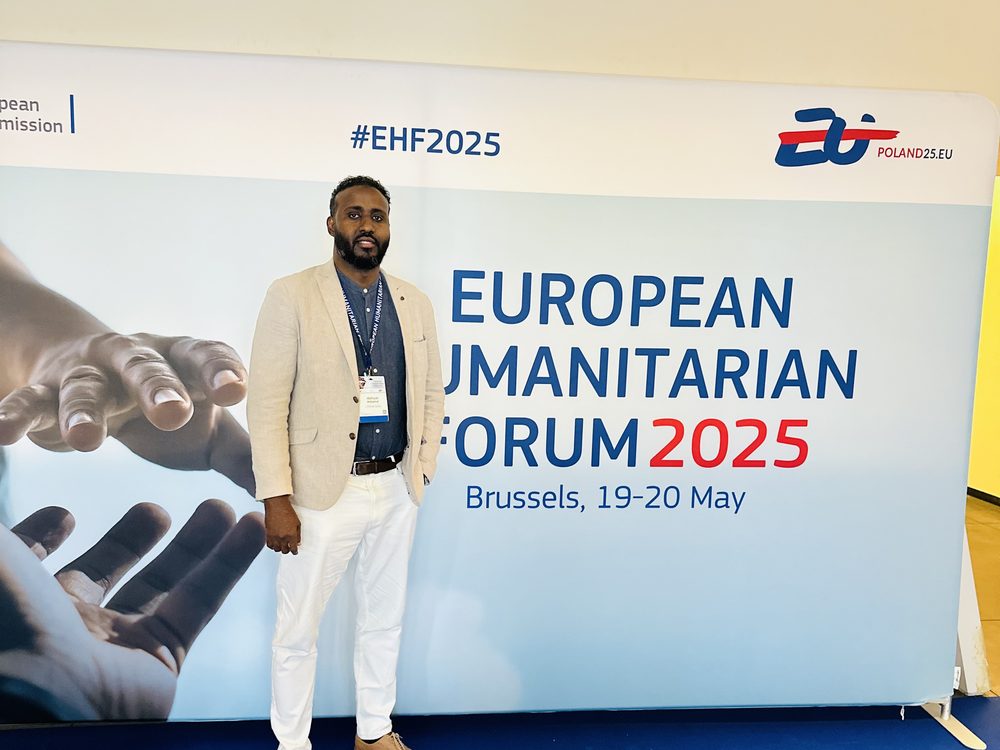
A Somali NGO invited to speak for local voices
The European Union's principal humanitarian gathering, organised around an integrated approach to fragility and humanitarian diplomacy — with Somalia itself as one of the Forum's case studies.
Bilateral meetings with Concern Worldwide's Chief Executive and with ECHO, arguing for more funding to the Somalia crisis and for the localisation commitments to be met in practice.
Read the full account →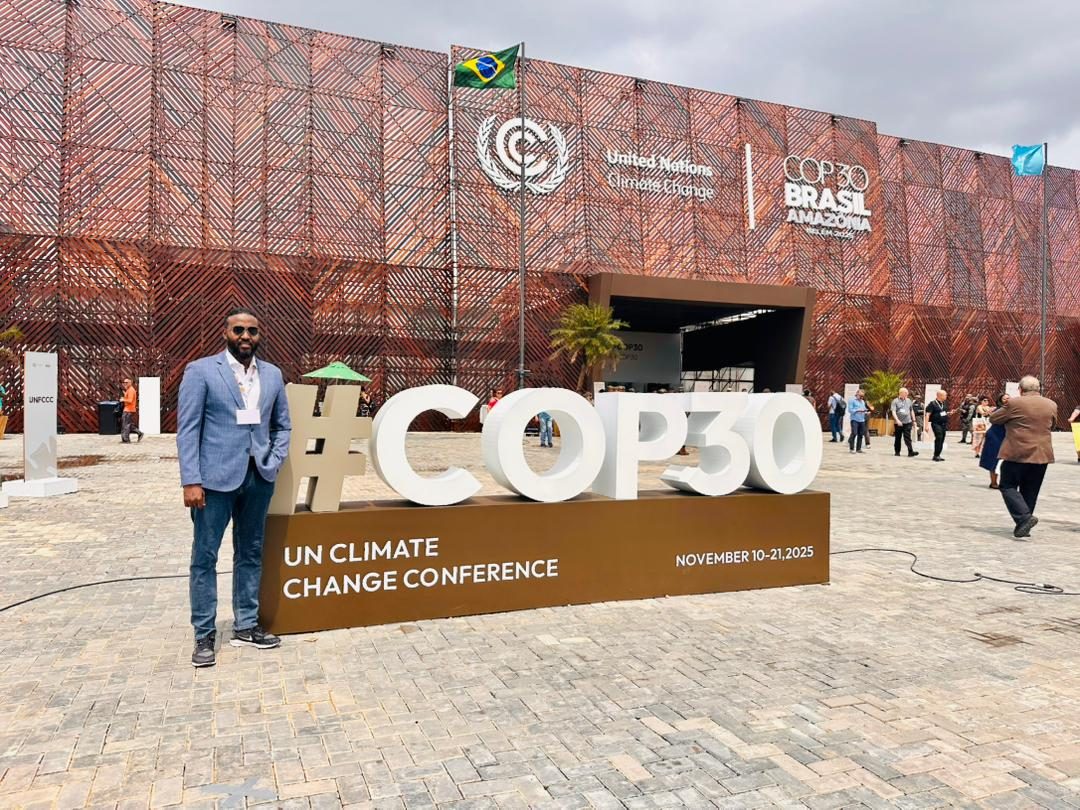
Forty hours from Nairobi to the room where climate finance is decided
Lifeline Gedo attended as a locally led adaptation practitioner rather than as an observer — to put the realities of a fragile, conflict-affected border region in front of the people who set climate finance priorities.
GIZ committed to exploring a complementary hydroponics project, and that project is now running in Gedo. Irish Aid and UN climate teams commended Hanaano's evidence directly.
Read the full account →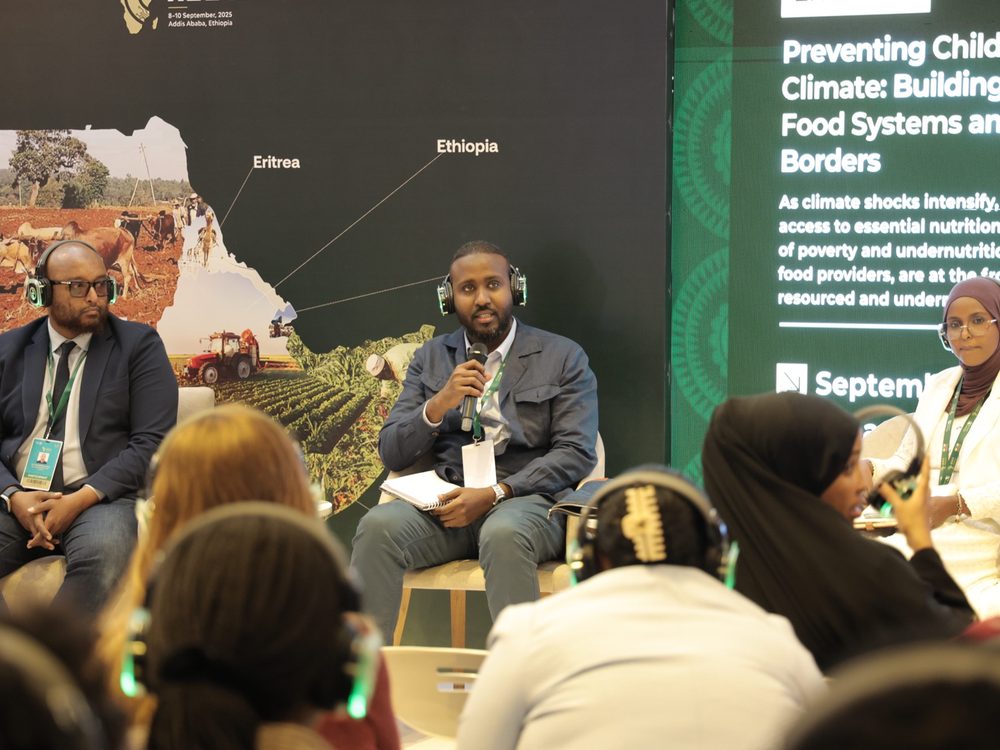
Preventing child wasting in a changing climate
Hanaano convened its own session at the IGAD pavilion, bringing the argument that nutrition, livelihoods, water and women's empowerment are one problem rather than four onto a continental stage.
Lifeline Gedo opened the session with lived experience from Gedo and sat on the panel that followed, alongside partners from Kenya and Ethiopia.
Read the full account →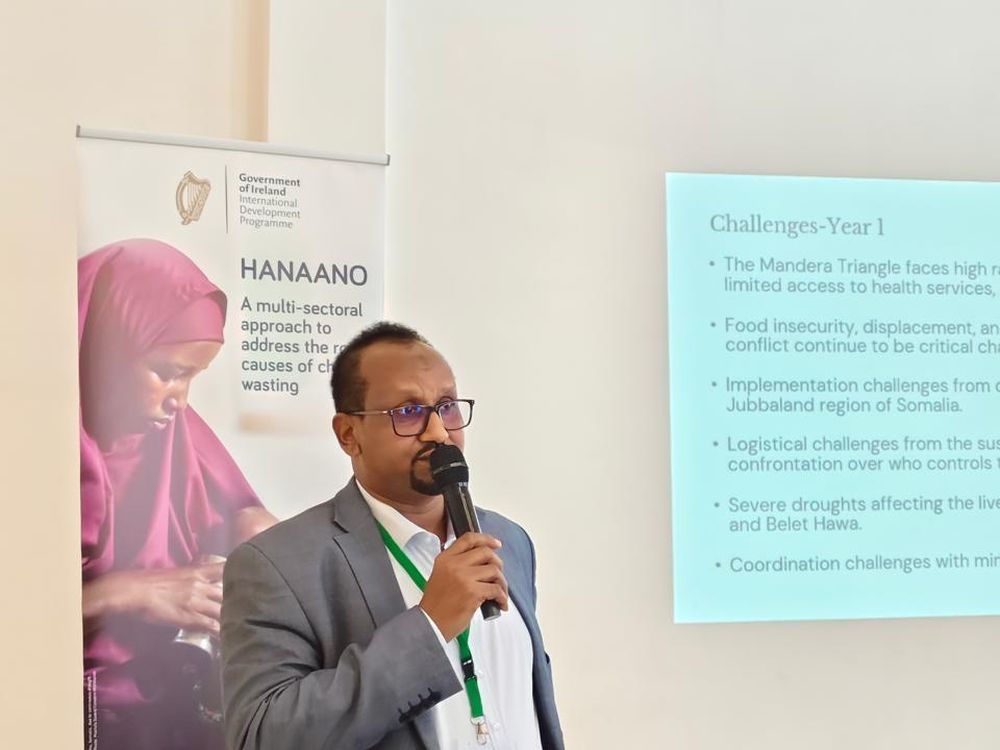
Taking year-one delivery to the regional table
Irish Aid, the IGAD Centre of Excellence in Nutrition and government authorities from Somalia, Kenya and Ethiopia met to review the first year of Hanaano. Lifeline Gedo sits on the group as a technical member.
What we brought was delivery evidence from Belet Xaawo and Dollow — the achievements and the obstacles both — so that regional strategy is set on what is actually happening in the field rather than on assumption.
Read the full account →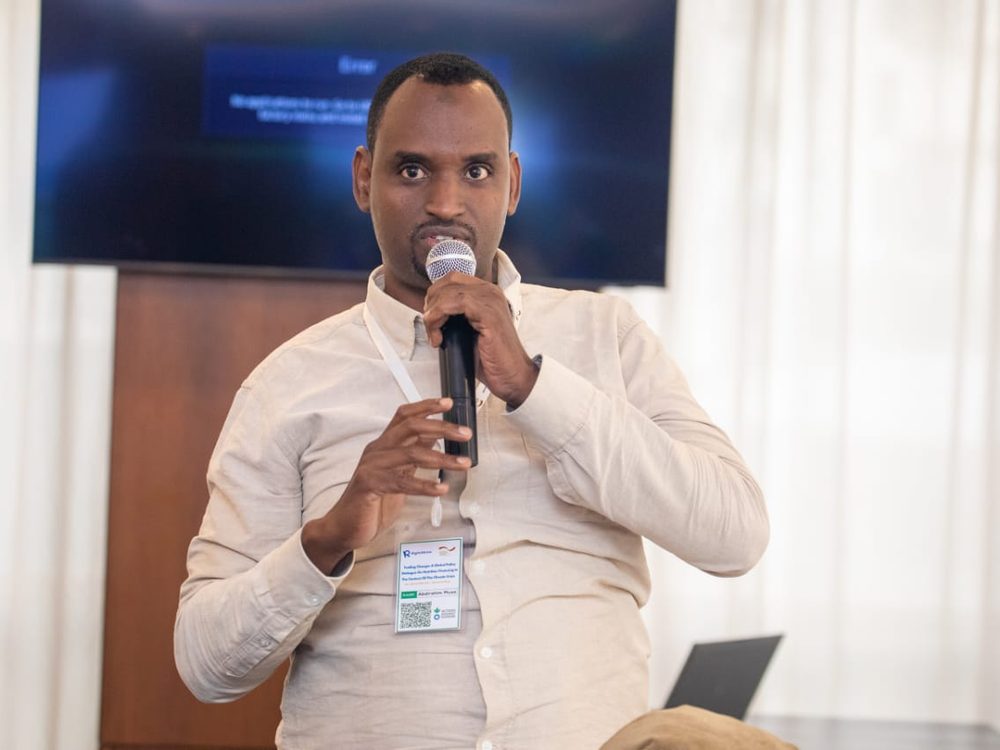
Making grassroots evidence move money
A three-day dialogue on nutrition financing in the context of the climate crisis, convened with Action Against Hunger alongside donor governments, elected representatives and local implementing partners.
During the dialogue, the humanitarian adviser to Somalia's Office of the Prime Minister pointed to Lifeline Gedo as an example on aid localisation, citing our long-running resilience programming in Gedo.
Read the full account →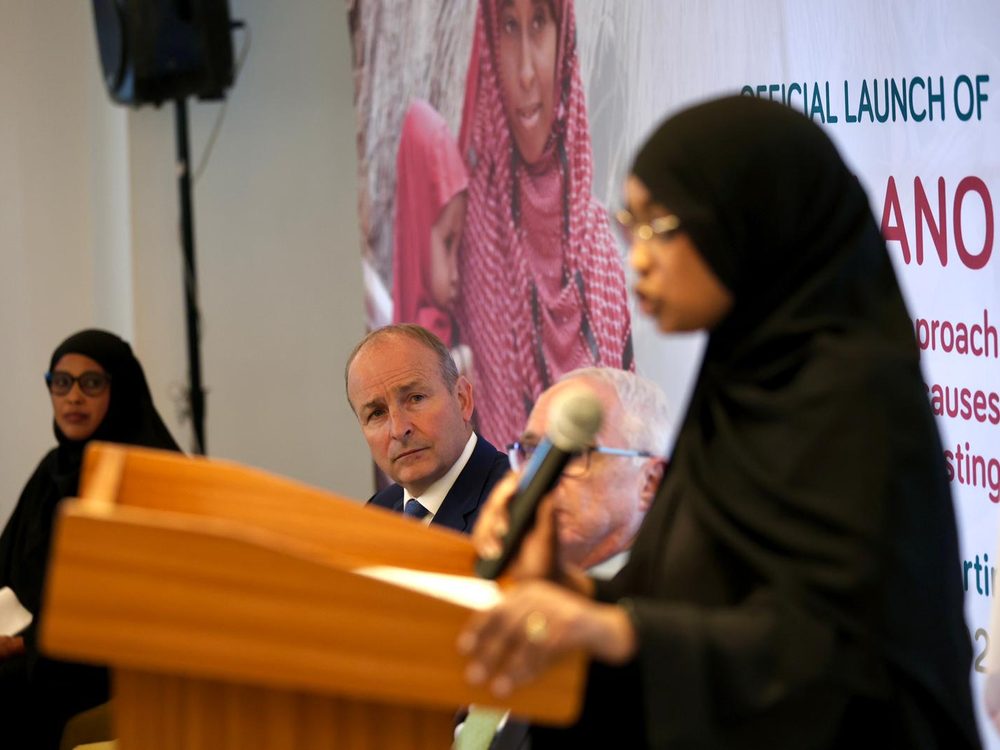
Opening with a mother, not a statistic
Irish Aid invited Lifeline Gedo to deliver a speech at the launch of the Hanaano programme, during the visit of the Tánaiste, Ireland's Deputy Prime Minister.
The address did not open with figures. It opened with families like Halima's — and with the argument that this work is about dignity, and about a family's fundamental right to nutritious food.
Read the full account →The European Humanitarian Forum
The European Union's principal annual humanitarian gathering — where the Commission, ECHO, member states, UN agencies and the major international NGOs set direction for the year ahead. Lifeline Gedo was invited as a local partner from Somalia, to represent local voices in the room.
Two Themes, Both Ours
The 2025 Forum organised itself around two questions, and Lifeline Gedo has a direct stake in each.
The first was an integrated approach to fragility: how to bridge immediate relief and long-term solutions by making humanitarian, development and peace actors work as one system rather than three. That is not a theoretical question in Gedo. It is the difference between treating a malnourished child and preventing the next one — the argument our whole programme design rests on.
The second was humanitarian diplomacy: upholding international humanitarian law, safeguarding humanitarian access, and protecting aid workers. In Somalia, access is not an abstraction. It is negotiated locally, community by community, and it is one of the clearest practical arguments for why local organisations reach places international agencies cannot.
The Forum met against a backdrop of more than 305 million people worldwide needing urgent humanitarian assistance, and a funding environment tightening at exactly the wrong moment.
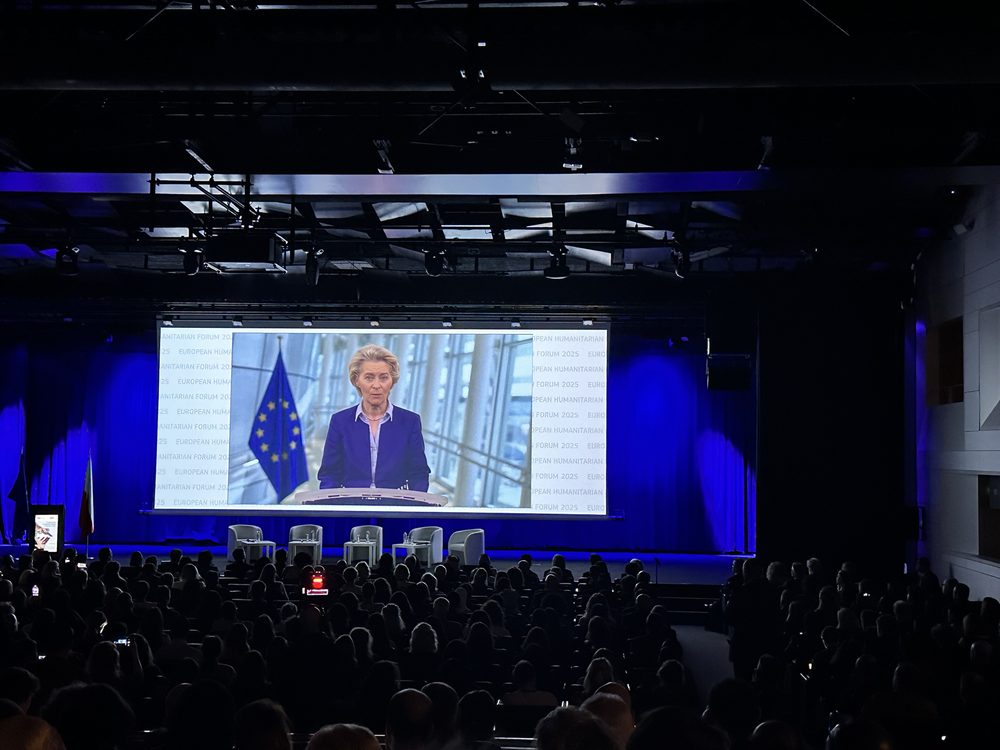 The opening plenary, EHF 2025
Our Country as the Case Study
The integrated-approach theme was not argued in the abstract. One of the Forum's sessions took it directly to our context: Moving Towards a People-Centred Integrated Humanitarian Approach in Fragile Contexts — a Case Study from Somalia.
For a Somali organisation in the room, that session was the whole reason for the journey. When Somalia is discussed in Brussels, the question is always whether the people describing the context are the people working in it. Our presence meant the answer was yes.
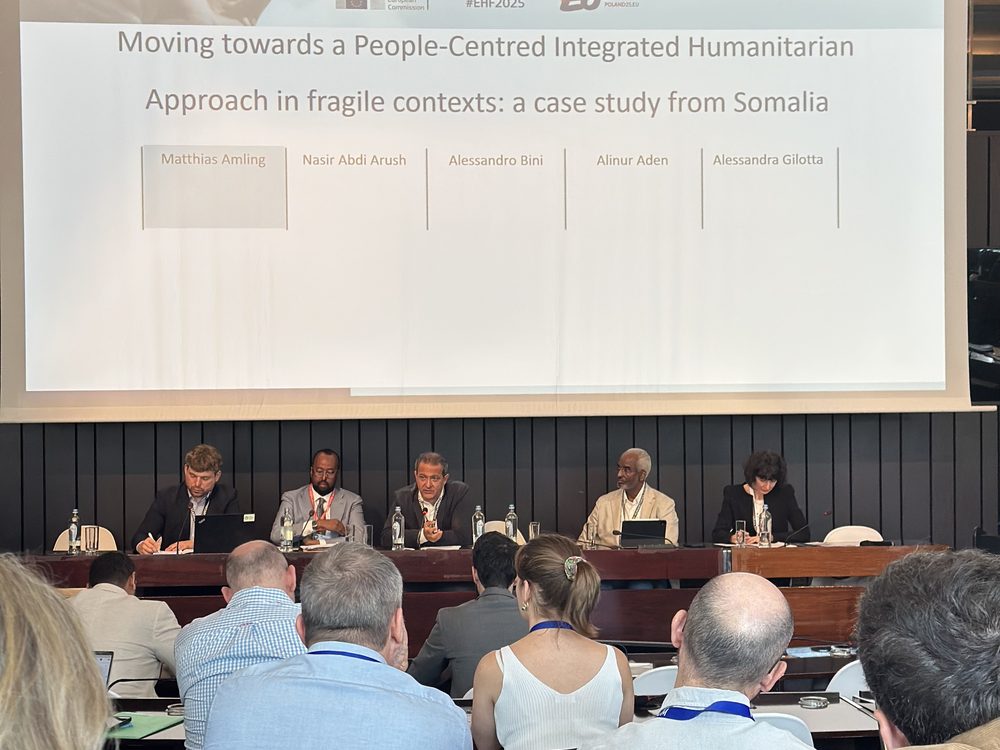 Somalia case study session, EHF 2025
Sixteen Years of Partnership, Reviewed With the Chief Executive
Lifeline Gedo met Dominic Crowley, Chief Executive of Concern Worldwide, to take stock of a partnership that has run continuously since 2009 — through drought responses, the BRCiS consortium, Caafimaad Plus and Hanaano.
The discussion covered what the two organisations have learned working together, what has actually been achieved in Gedo, and where the partnership goes next. We also used the meeting to say something that is easier to say in person than in a report: Concern Somalia's sustained investment in Lifeline Gedo's institutional capacity is the reason we can hold the contracts we now hold. The systems, the financial controls and the compliance record that made us a full member of the BRCiS consortium were built over years of partnership, not acquired overnight.
That is what genuine localisation looks like from the inside: not a transfer of risk, but an investment in another organisation's capability until it can carry the work itself.
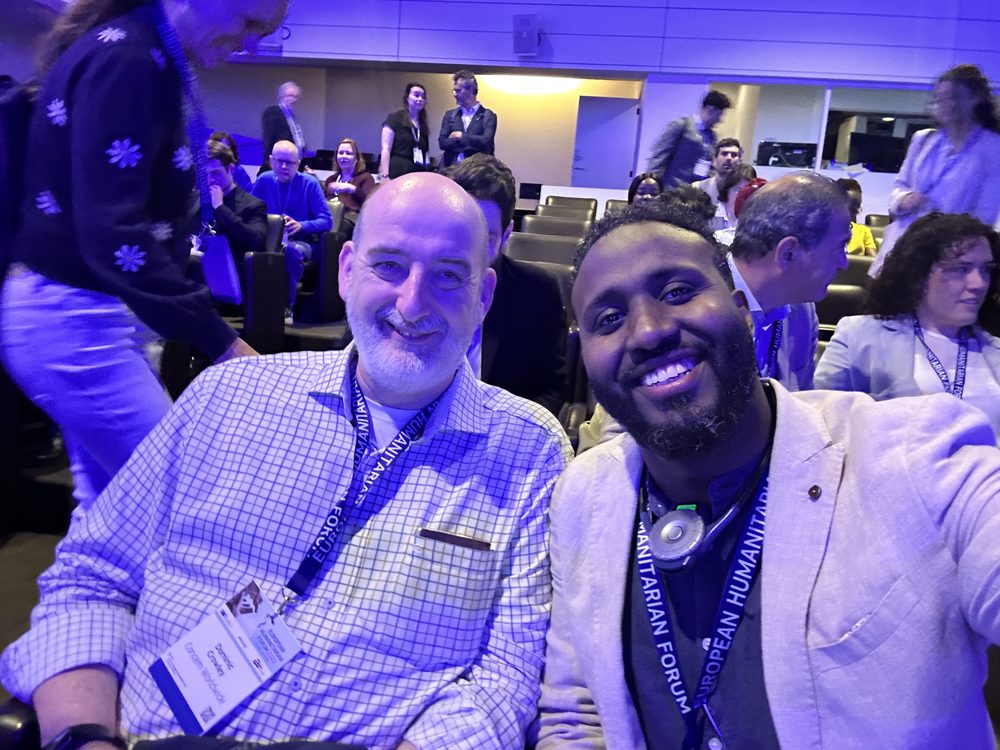 With Dominic Crowley, CEO, Concern Worldwide
Making the Case to Somalia's Largest Humanitarian Donor
Lifeline Gedo met leaders from ECHO — the European Commission's Directorate-General for European Civil Protection and Humanitarian Aid Operations — with two arguments.
The first was more funding for the Somalia crisis: a country facing simultaneous drought, flood, displacement and conflict, in a year when the humanitarian response plan was catastrophically underfunded.
The second was the localisation agenda — and here we were not asking to be trusted in the abstract. Lifeline Gedo is already a member of the Somali Cash Consortium and of Caafimaad Plus, both ECHO-funded. We are already delivering European humanitarian money in one of the hardest operating environments on the continent, to European standards of accountability. The question we put was not whether local organisations can be trusted with direct funding, but why the share reaching them remains so far below what the commitments promised.
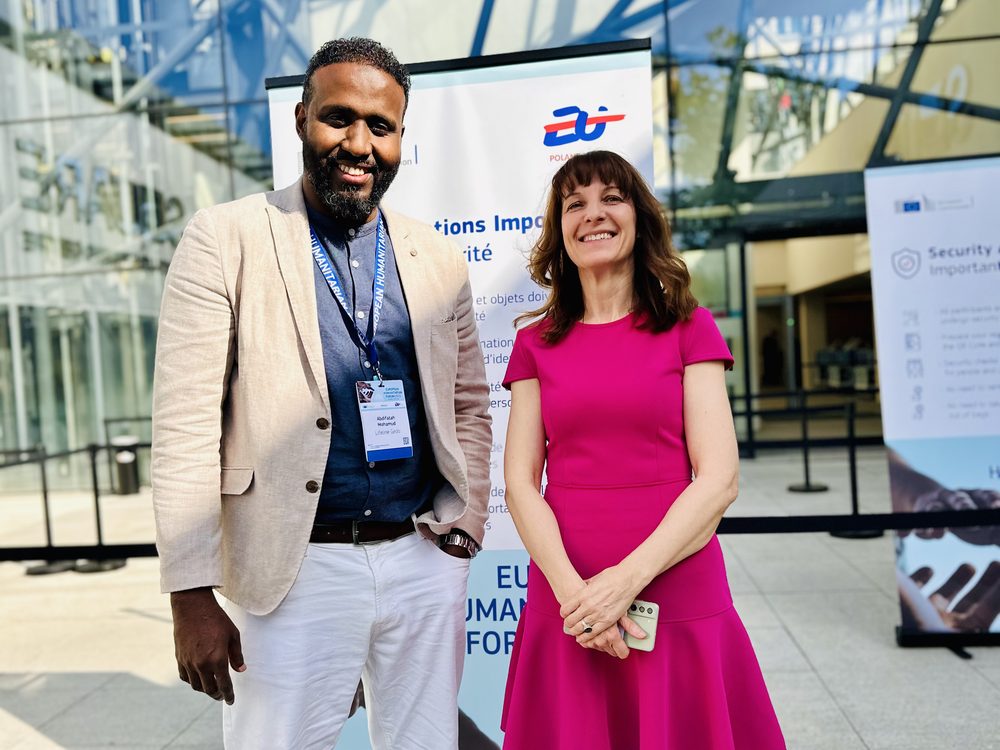 Bilateral meetings, EHF 2025
Why This Forum Mattered for Lifeline Gedo
Four reasons, and none of them are ceremonial.
Access without an intermediary. Almost everything a Somali national NGO wants to say to European decision-makers normally travels through an international partner. For two days in Brussels it did not have to. We made our own case, in our own words, to the people who decide.
Position before the decisions, not after. Funding priorities for the year ahead are shaped in rooms like this one. Being present while they are formed is worth more than responding to them once published.
Relationships that later produced money. The European engagement of 2025 is not an abstraction on a webpage. It ran directly into GIZ's interest in climate-smart agriculture, which became a directly funded hydroponics project now operating in Gedo.
Evidence for the localisation argument. Every commitment to shift funding to local actors is only as credible as the local actors able to absorb it. Lifeline Gedo went to Brussels as a twenty-one-year-old Somali organisation with audited systems, consortium membership and a delivery record — which is to say, as the answer to the objection.
A Somali NGO in Brussels
Invited as a local partner to represent local voices at the European Union's principal humanitarian forum.
Brussels, Belgium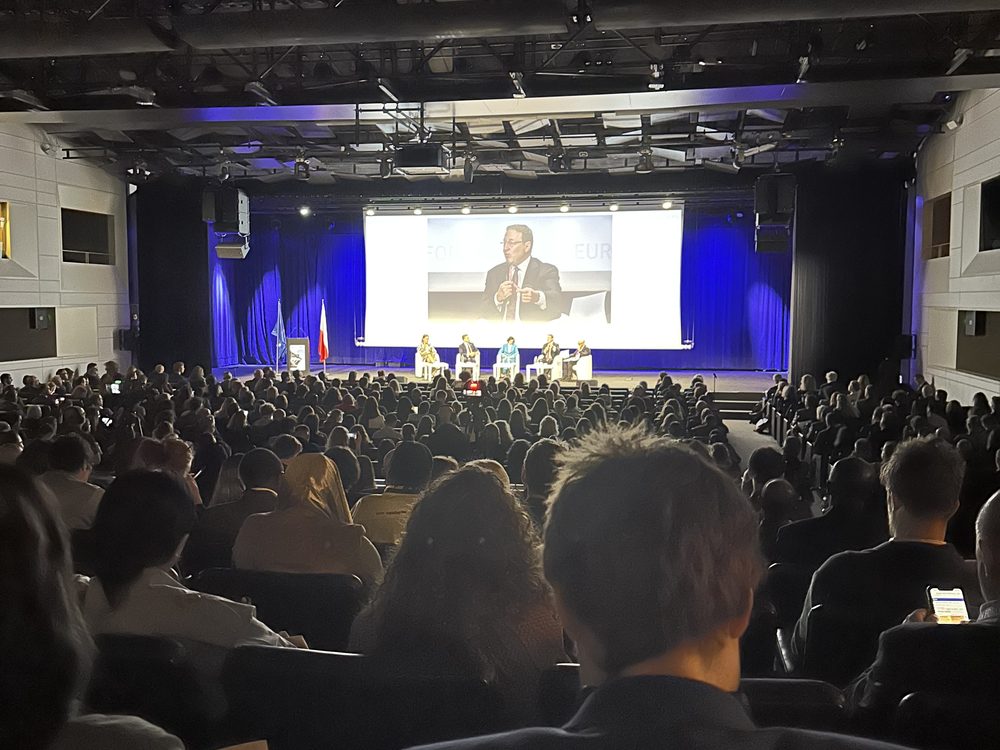
Where the Year Is Set
The Commission, ECHO, member states, UN agencies and the major international NGOs, in one hall for two days.
European Humanitarian Forum
Somalia, People-Centred
Moving towards a people-centred integrated humanitarian approach in fragile contexts — with Somalia as the case study.
EHF 2025COP30
The UN Climate Change Conference — and the argument that climate finance should reach the organisations closest to the people it is meant to protect.
COP30: What a Local Organisation Went to Do, and What It Brought Home
Our Executive Director, Abdifatah Ahmed Mohamud, reached Belém past midnight on 12 November after forty hours in transit — Nairobi to Doha to Belém. He went as a locally led adaptation practitioner rather than as an observer, with a specific job: to put the realities of a fragile, conflict-affected border region in front of the people who decide where climate finance goes, and to come back with something the programme could use.
Lifeline Gedo's attendance plan was submitted in advance to the Federal Government's Ministry of Environment and Climate Change, setting out where our delegates would contribute so that Somalia's voice was carried consistently. Abdifatah covered locally led adaptation, renewable energy, the climate–nutrition nexus and financing for frontline action; Safia Mohamed Sheikh covered women's leadership in Self-Help Groups, gender-responsive climate action and nutrition–resilience linkages.
Across the fortnight he took part in sessions on locally led adaptation in fragile contexts, Africa climate finance and localisation, the climate–nutrition nexus, climate-resilient food systems in arid regions, community-led early warning, anticipatory action financing, and the operationalisation of the Loss and Damage Fund — alongside a Horn of Africa resilience dialogue convened by IGAD and Somalia's own adaptation priorities briefing.
COP30, Belém, BrazilWhat came out of it
- GIZ committed to exploring a complementary hydroponics project after a bilateral meeting, with formal connections made to their Nairobi office. That project is now running in Gedo.
- Irish Aid held a dedicated side meeting and commended Hanaano's results in the Mandera Triangle directly.
- FCDO, through BRCiS-linked representatives, engaged on resilience, climate–nutrition and Somalia's localisation agenda.
- Private donors from the United States expressed interest in hydroponics, solar irrigation and community-based early warning.
- The Somali government delegation and LLG coordinated donor engagements and aligned messaging on national adaptation priorities across the fortnight.
What COP30 confirmed
- The global climate agenda is shifting decisively toward locally led adaptation.
- Climate–nutrition linkages are now a donor priority rather than a niche argument.
- Scalable climate-smart agriculture — hydroponics above all — is in demand where water is scarce.
- Somalia is gaining donor interest for resilience and adaptation programming.
- Nothing in the discussions challenged Hanaano's model. Session after session confirmed that linking agriculture, mother-to-mother support, livelihoods and early warning is where the evidence is heading.
What we would do differently
- Plan structured bilateral donor meetings earlier, rather than building them on the ground.
- Arrive with polished communication materials — one-pagers, banners and video.
- Push to participate as a speaker or co-host in official side events, not only as a delegate.
- Coordinate to schedule more targeted technical sessions against the programme's specific questions.
LLG at the Africa Climate Summit
Lifeline Gedo joined leaders and partners from across the continent at the second Africa Climate Summit, to argue that resilience against climate change is not built one sector at a time. Nutrition, livelihoods, water and sanitation, and women's empowerment have to move together, or they do not move at all.
The Address: How Climate Shocks Reach a Child's Plate
Safia Mohamed Sheikh, Lifeline Gedo's Livelihoods Coordinator, opened the session with the part of the story that rarely makes it into a continental forum: what a failed season actually does inside a household, and how women adapt when it does.
When a drought or a flood arrives, women are simultaneously producers and carers. They stretch what food remains, walk further for water, and still have to feed children whose nutritional needs have not paused for the weather. That double burden is where a climate shock turns into a wasted child — and it is also where the intervention has to land.
Her case was that the evidence already exists. Where women in Gedo have reached savings groups, markets and small climate-smart enterprises, they have put the returns straight into their children's food, health and schooling. Empowering women and supporting families does not only improve nutrition and income in the present; it leaves a community materially better prepared for the next shock.
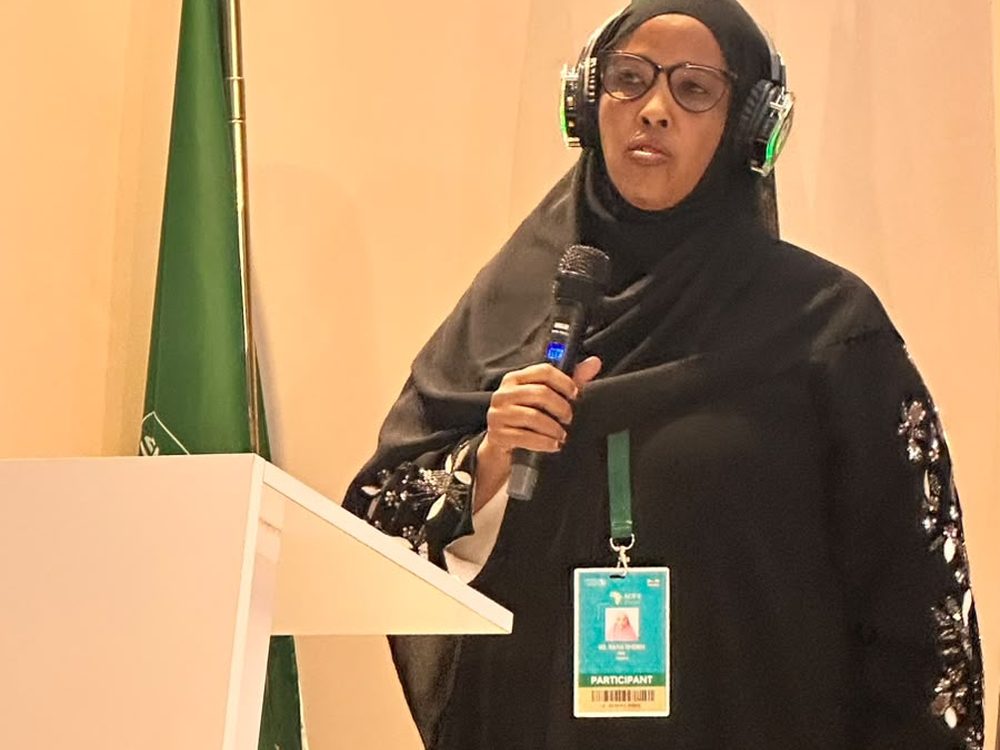 Opening the session, IGAD pavilion
The Panel: What Works in the Daua River Basin
Abdifatah Ahmed Mohamud, our Executive Director, joined the panel alongside Mohamed Abdi of Pastoralist Concern and Maryan Siyad of RACIDA — one panel, three countries, one border.
He was asked what integrated, locally led approaches show the most promise in the Daua River Basin, where communities now face flood and drought inside the same year. His answer was that the approaches which work are the ones that refuse to treat nutrition, livelihoods and climate as separate problems: drought-tolerant crops paired with nutrition education, livestock health systems running alongside maternal and child feeding, and early warning that triggers a livelihood response and a nutrition response together, before a child deteriorates.
And he named the gap. The first Africa Climate Summit committed billions to adaptation and to locally led action. Very little of it has reached pastoralist and borderland communities. Until those commitments reach fragile border areas like Gedo, communities stay trapped in cycles of crisis response — and the link between a climate shock and a wasted child stays unbroken.
Panel: Livelihoods in Transition & Preventing Child Wasting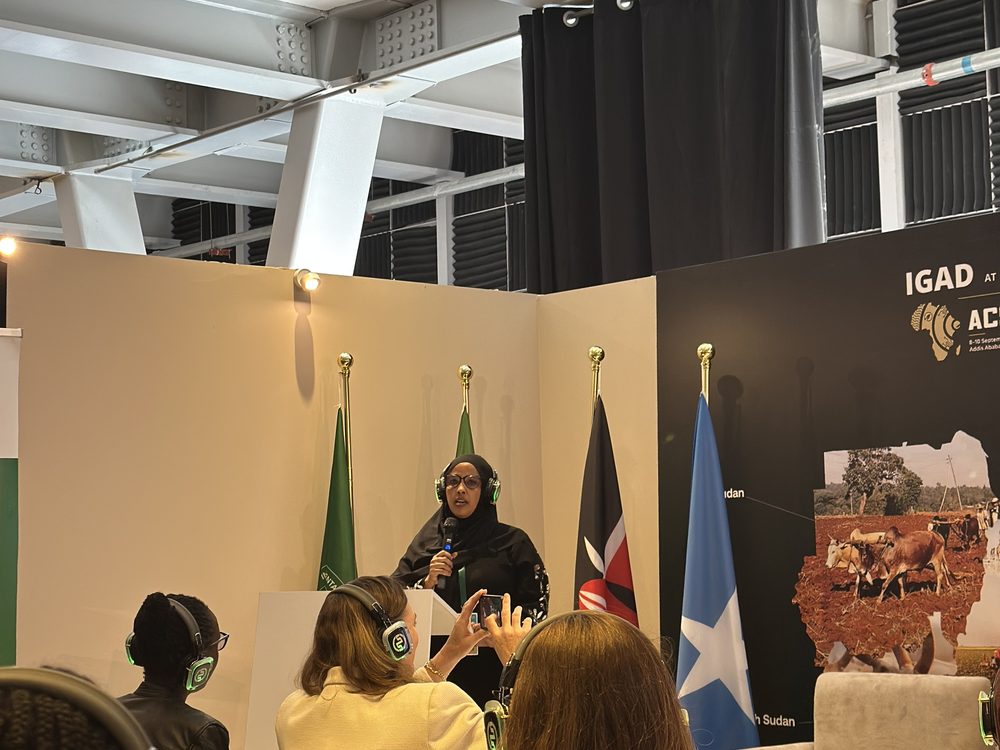
A Full Room at the IGAD Pavilion
The session drew government representatives, donors, UN agencies and civil society from across the Horn of Africa.
IGAD pavilion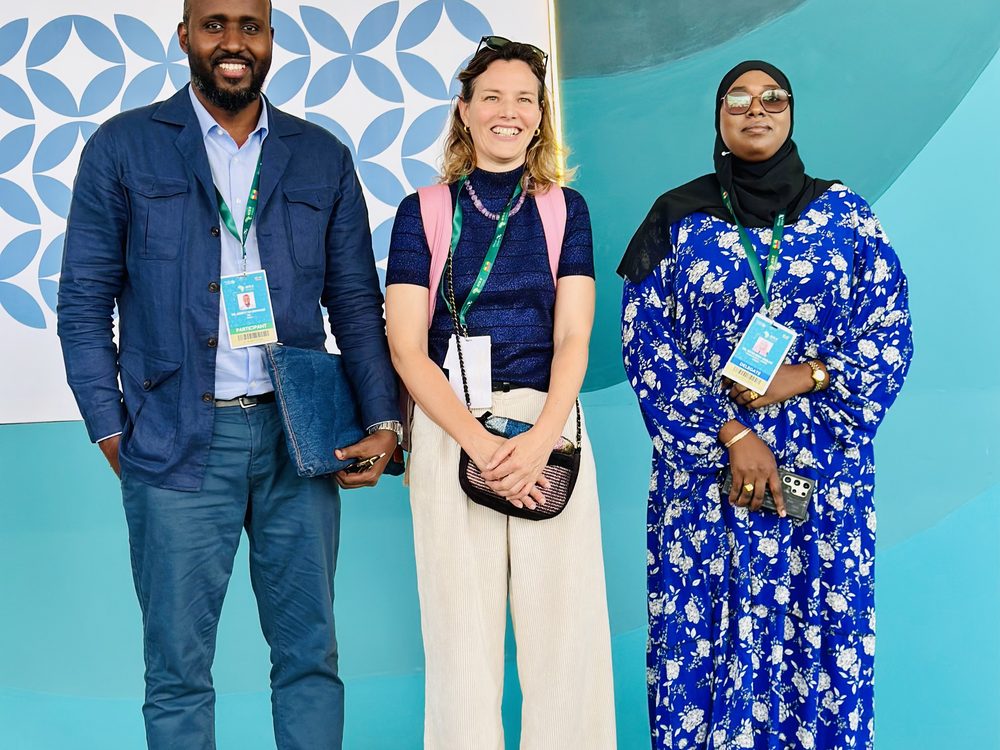
Showcasing the Model
Hanaano presented at the Welthungerhilfe and World Vision panel, and the team visited the Irish Aid Embassy to share progress and the realities communities still face in Gedo.
Addis Ababa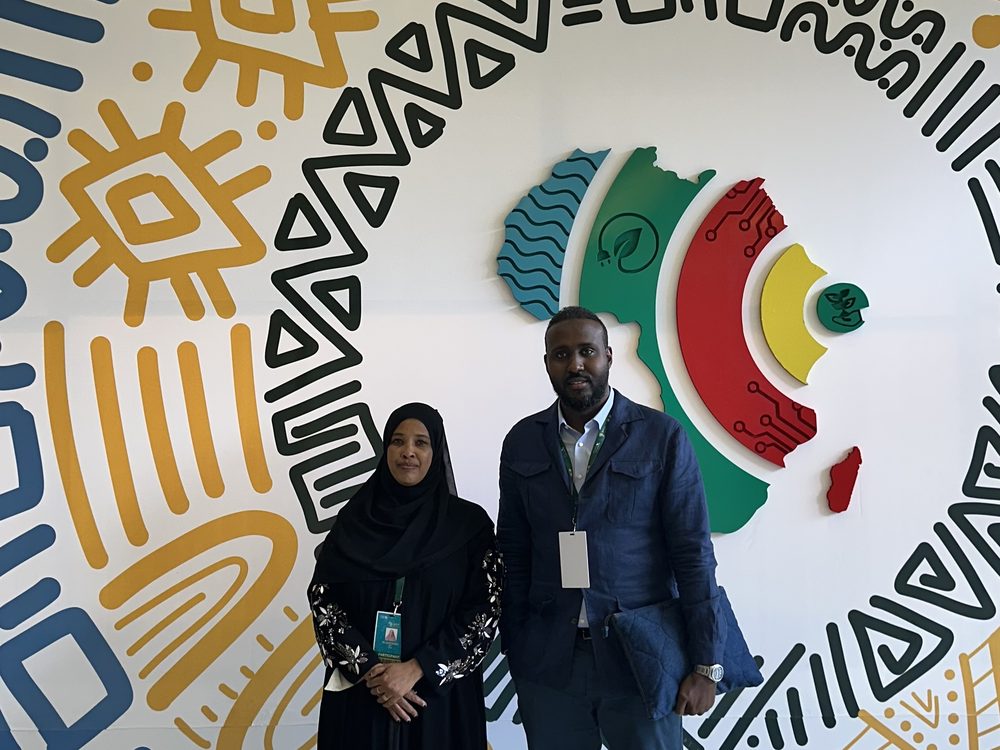
Somalia in the Room
Two delegates from one Somali organisation, at a summit where most of the continent's frontline responders were represented by somebody else.
Africa Climate Summit IIHanaano Government Authority Group
The Mandera Triangle is one border area served by three national systems. A child's nutrition does not change at the frontier — but the programmes reaching that child do. This is the forum that exists to close that gap.
Reviewing the First Year of Delivery
Osman Mohamed Abdullahi, Lifeline Gedo's Programmes Director, attended as a technical member of the Government Authority Group, representing LLG as the organisation implementing Hanaano in Belet Xaawo and Dollow.
Hosted by the IGAD Centre of Excellence in Nutrition, the meeting brought together Irish Aid as the project donor, government authorities from Somalia, Kenya and Ethiopia, and the full implementing consortium — Concern Worldwide across all three countries, Lifeline Gedo in Somalia, RACIDA in Kenya and Pastoralist Concern in Ethiopia.
LLG's contribution centred on field evidence: the nutrition, WASH and food security work in Belet Xaawo and Dollow, the humanitarian conditions communities continue to face, and the achievements, challenges and lessons of the first year of delivery.
The exchange ran in both directions. Sitting with RACIDA, Pastoralist Concern and the Concern Worldwide country teams, and engaging directly with Irish Aid and government representatives from all three countries, participants identified good practice, the constraints common to every side of the Triangle, and where harmonised approaches would strengthen the response.
Presenting year-one delivery, Addis Ababa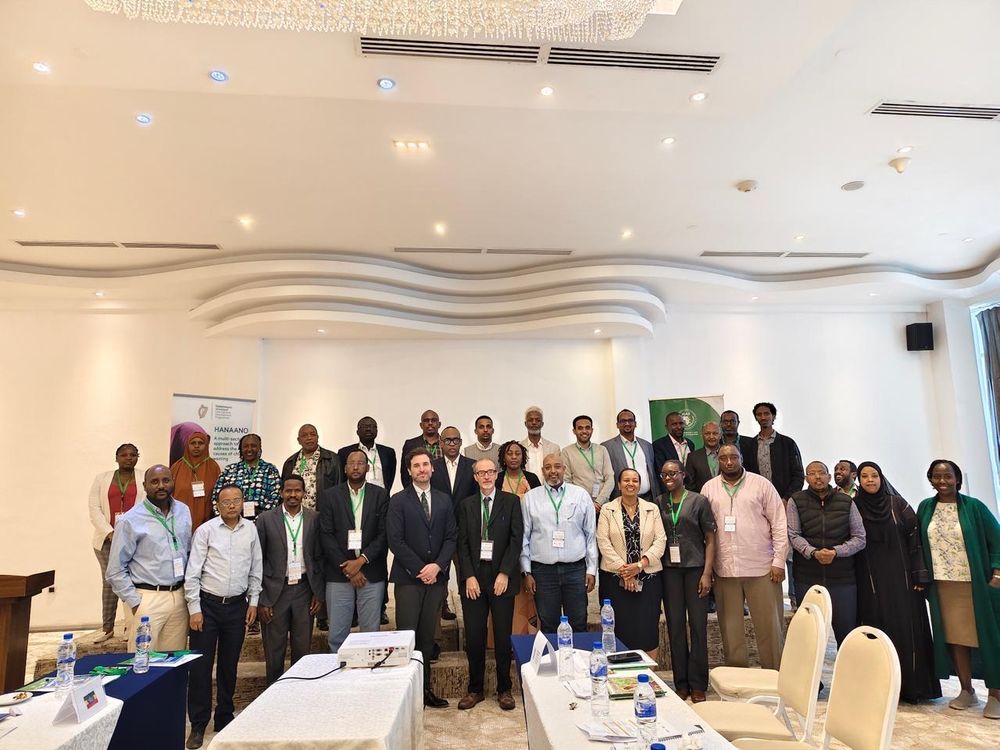
Three Governments, One Programme
Irish Aid, the IGAD Centre of Excellence in Nutrition, government authorities from Somalia, Kenya and Ethiopia, and every implementing partner in one room.
Addis Ababa, Ethiopia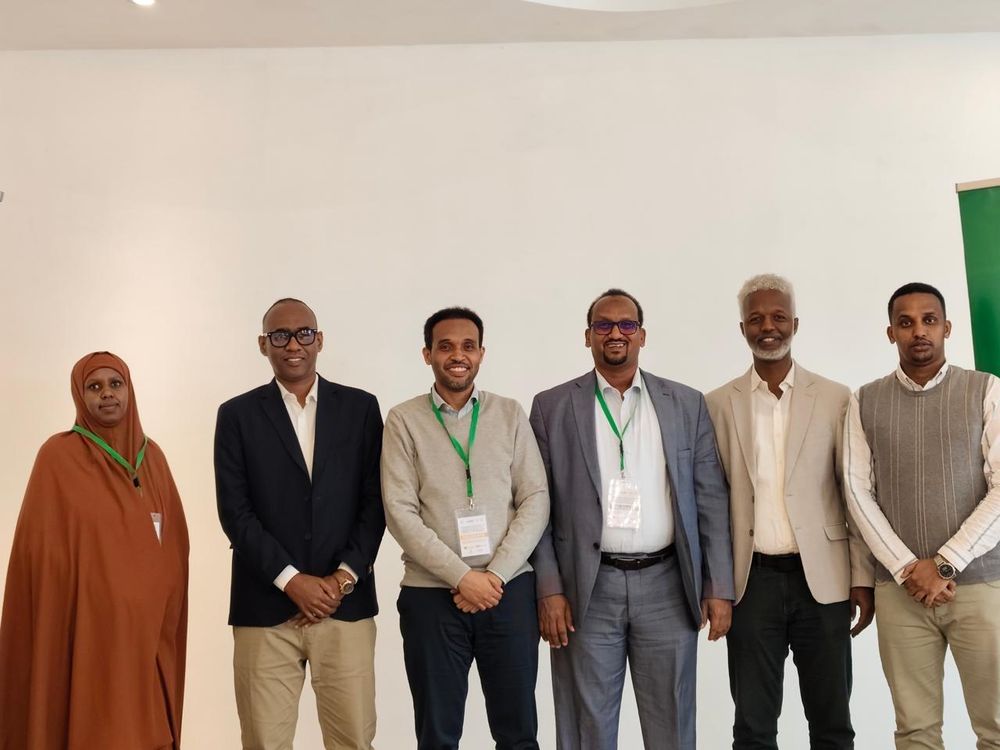
Partners Across the Triangle
Lifeline Gedo alongside Concern Worldwide, RACIDA and Pastoralist Concern — the partners delivering Hanaano across the Somalia, Kenya and Ethiopia borderlands.
Mandera Triangle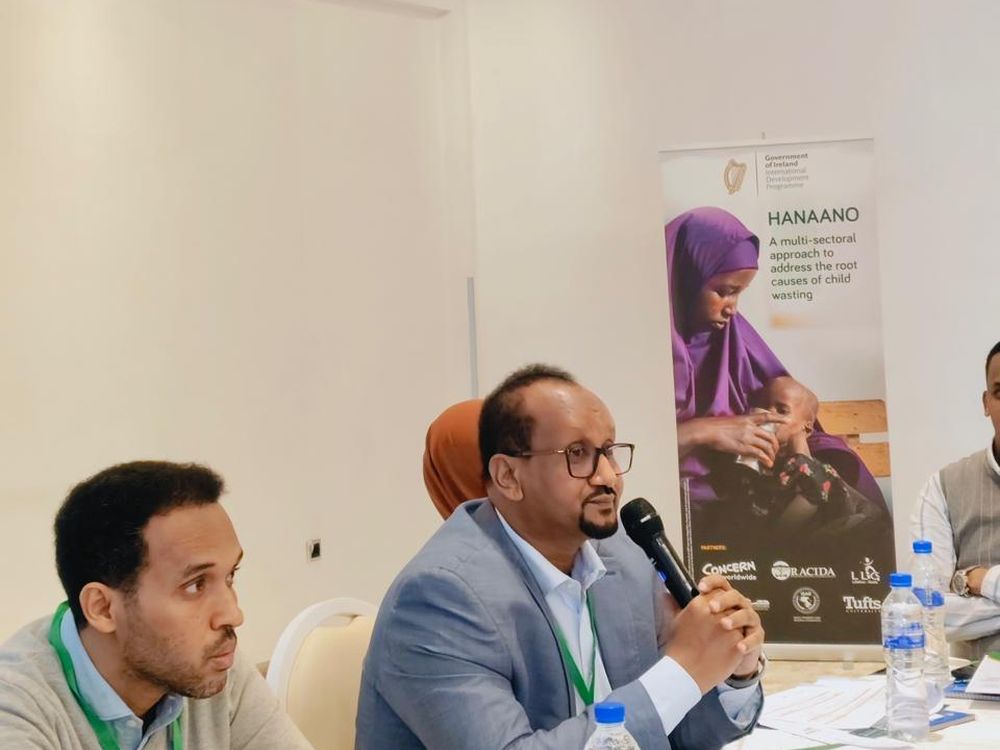
Field Evidence, Regional Decisions
Implementation experience from Belet Xaawo and Dollow presented into the forum that sets the programme's technical oversight and direction.
Hanaano GAGFunding Change: Global Policy Dialogue on Nutrition Financing
A three-day dialogue on financing nutrition in the context of the climate crisis, convened with Action Against Hunger.
Making Grassroots Evidence Move Money
Abdirahim Musa, Lifeline Gedo's Programme Quality Manager, represented the organisation in a room that brought together elected government representatives, donor governments, technical and advocacy specialists, and — critically — local implementing partners.
Discussion centred on three questions. How to carry the case for nutrition financing into the next COP summit, so that nutrition is argued for where climate money is actually decided. How to test and strengthen the advocacy toolkit developed by Action Against Hunger, with input from the organisations expected to use it. And how community-led advocacy can be properly resourced, so that grassroots evidence leverages donor funding rather than being collected and then set aside.
That third question is the one Lifeline Gedo exists to answer. We are a Somali organisation working in Gedo, and the argument that local actors should hold the microphone in these rooms is not abstract to us — it is the difference between communities being described and communities being heard.
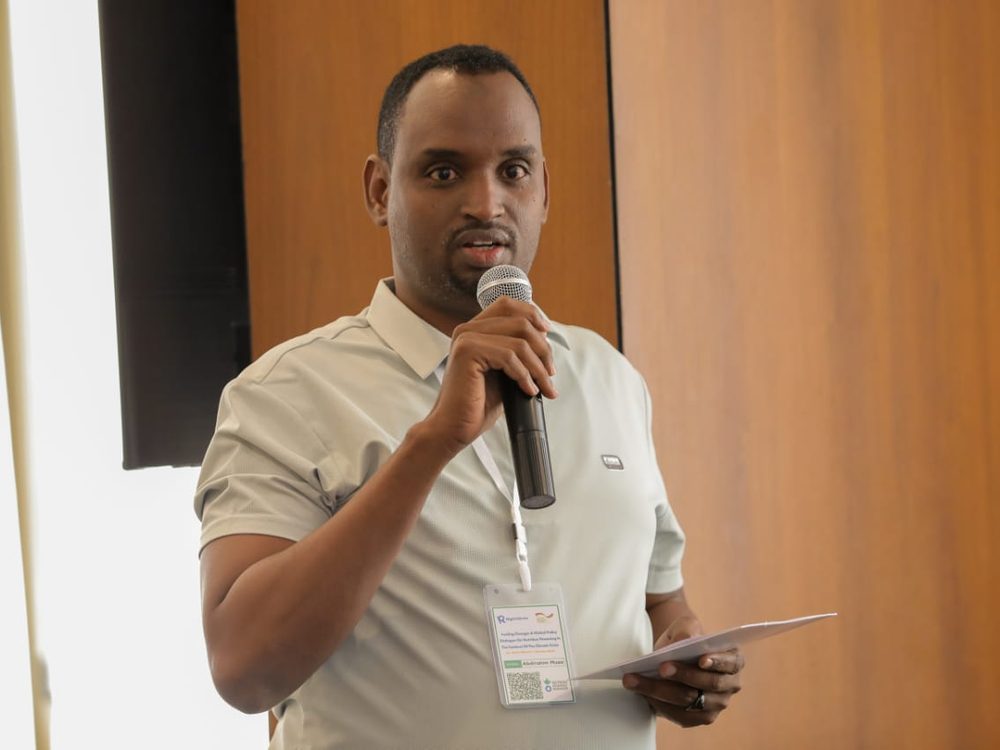 Funding Change dialogue, Addis Ababa
The Launch of Hanaano
Every programme on this page began somewhere. Hanaano began in a room in Nairobi — and Irish Aid asked a Somali organisation to speak first.
Opening With a Mother, Not a Statistic
Lifeline Gedo was invited by Irish Aid to deliver a speech at the official launch of the Hanaano programme, during the visit of the Tánaiste — Ireland's Deputy Prime Minister — Micheál Martin.
Safia Mohamed Sheikh spoke for LLG, and she did not open with figures. She described the realities of families like Halima's: mothers striving to feed their children through poor harvests, through insecurity, and through support that does not stretch far enough — a reminder that this work is about restoring dignity, and about every family being able to exercise a fundamental human right to nutritious food.
That framing still holds. Lifeline Gedo remains committed to building resilience, preventing child wasting, and standing with communities as they navigate conflict, climate shocks and poverty — with Hanaano as a cornerstone for integrated, community-driven solutions.
Official launch of Hanaano, Nairobi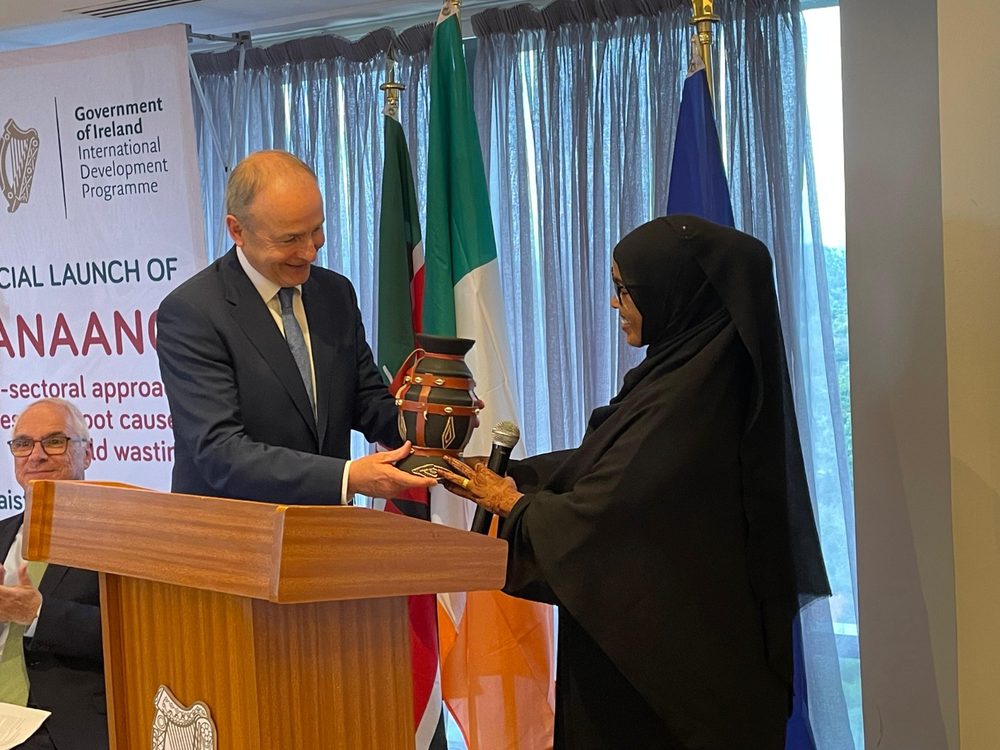
A Gift from Gedo
A traditional Somali vessel presented to the Tánaiste on behalf of the communities the programme was created to serve.
Nairobi, Kenya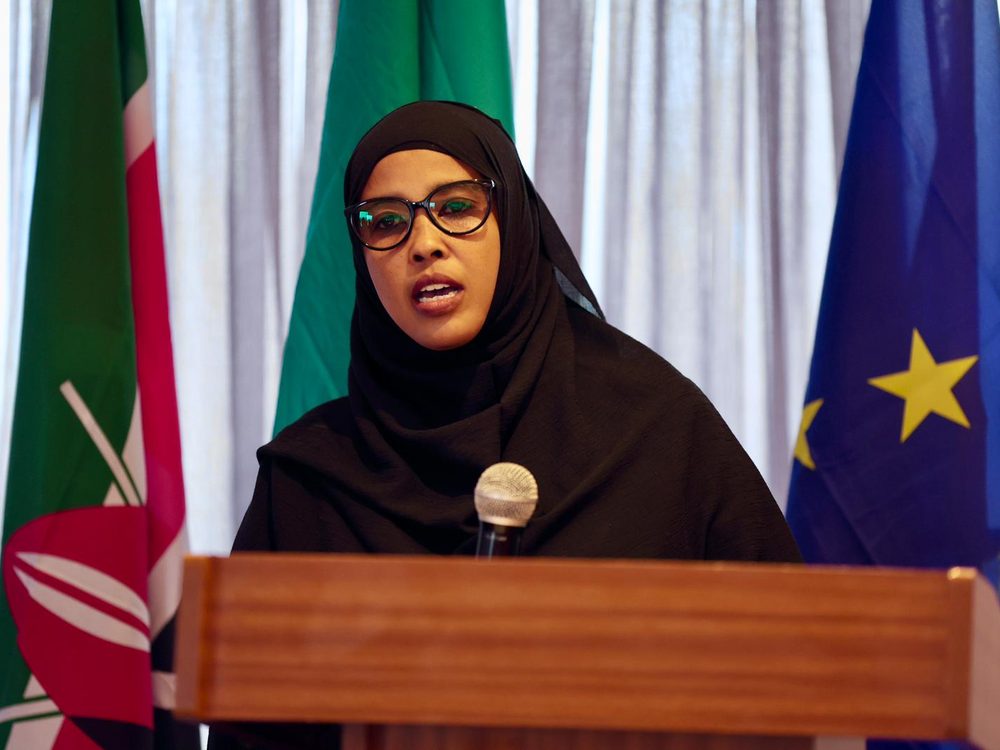
Speaking for Gedo's Mothers
A local organisation given the floor at its own programme's launch — the practice of localisation rather than the language of it.
Hanaano launch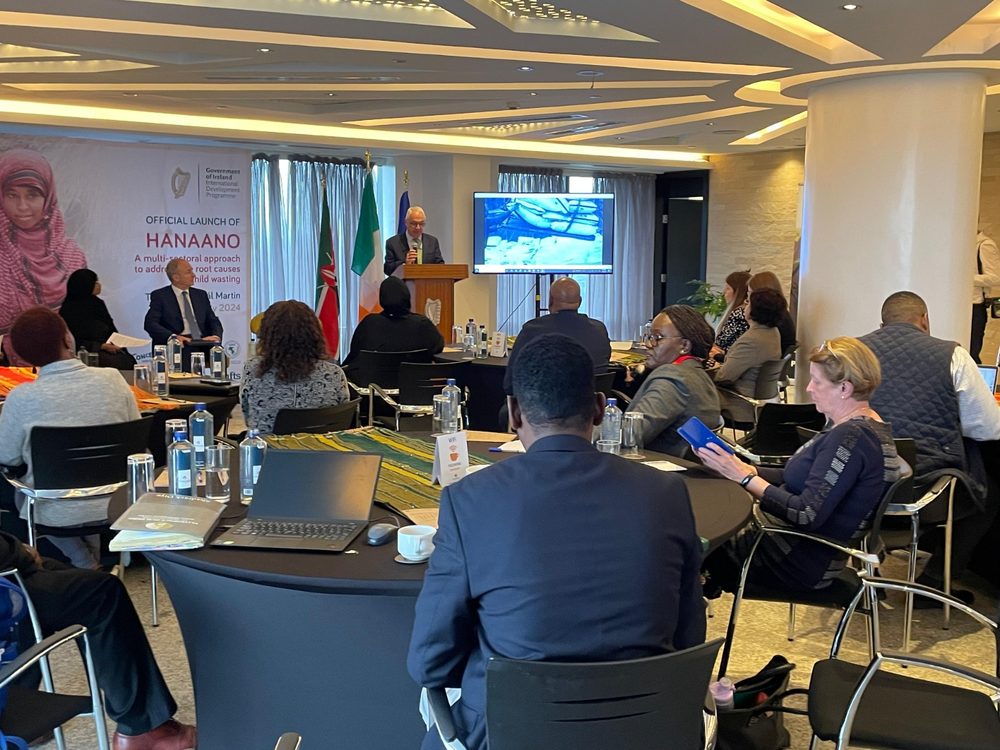
Where Hanaano Started
Irish Aid, Concern Worldwide, UNICEF and the consortium partners at the programme's official launch, two years before the results on this page.
Official launchOther Engagements
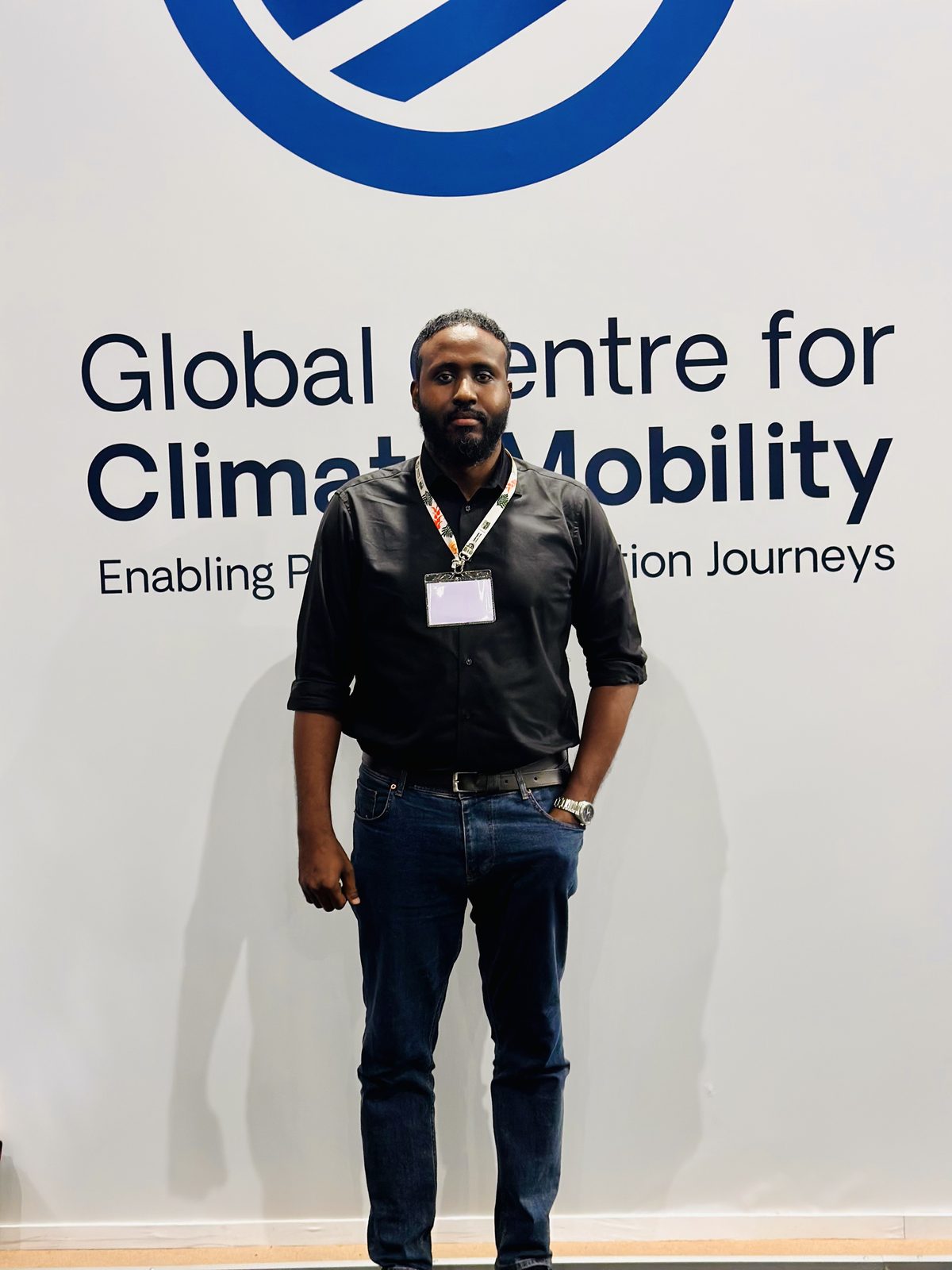
Global Centre for Climate Mobility
Engagement on climate mobility and displacement — a lived reality in Gedo, where drought and conflict repeatedly force families from their homes.
Climate mobility dialogueOur Advocacy Messages
Locally led adaptation is not a preference — it is what works
In fragile contexts, national and local organisations reach communities that others cannot, at lower cost and with deeper accountability. Climate and humanitarian finance should flow to them directly, not only through intermediaries.
Climate and nutrition cannot be treated as separate problems
Drought, crop failure and livestock loss end in a malnourished child. Programmes that link climate-smart agriculture, livestock health, water and nutrition services — as Hanaano does in Gedo — address the cause rather than only the symptom.
Fragile states must be able to reach the funds meant for them
Adaptation finance and the Loss and Damage Fund matter only if countries like Somalia can actually access them. The systems and eligibility routes need to be built with fragile, conflict-affected contexts in mind from the start.
When women lead, communities hold
Across our programmes it is mothers who adapt livelihoods first and protect children's nutrition under pressure. Gender-responsive design is a condition of effectiveness, not an add-on to it.
What This Engagement Delivered
- Strengthened donor confidence in LLG's systems, leadership and delivery capacity.
- GIZ interest that led to a directly funded hydroponics project introducing water-efficient food production in Gedo.
- Full membership of the BRCiS consortium, in recognition of our systems and delivery record.
- Advanced bilateral agreements with Federal and Jubbaland State ministries.
- Greater visibility for Gedo's communities in continental and global climate forums.
- Plans initiated for a Washington, D.C. liaison office to deepen donor engagement and advocacy.
Partner With a Local Organisation That Delivers
We work with donors, consortiums and government to turn evidence from Gedo into effective response.